The 10 best Christmas songs

10. Happy XMas (War is Over) – John and Yoko
Sure, it’s a little hokey, but who cares? It has endured where so many other ephemeral songs have faded in part because the message remains just as vibrant and necessary as ever, and in part because…well…John really knew how to write a tune that would last. It’s worth noting that it starts out with a rather pointed question: “And so this is Christmas, and what have you done?” It’s not just a platitude about the power of the imagination to end the war, it’s a call to action. I’m always skeptical of the simplistic way that people categorize John and Paul as songwriters, but I suppose it’s worth mentioning that John’s contribution to the Christmas canon as some real depth to it, while Paul’s…well, it’s probably best that we just don’t talk about “Wonderful Christmastime.”

9. Lo How A Rose E’er Blooming – Sufjan Stevens (traditional)
I grew up listening to a lot of the classic Christmas carols – a few of which make the list – but I have to admit I don’t ever remember hearing this one as a kid. Thankfully, I got a late introduction through those Sufjan Christmas EPs. He has two versions, both of which are absolutely magical.

8. Jesus Christ – Big Star
Maybe the finest song from the great Alex Chilton. This song was recorded in the pits of despair and I honestly have no idea whether it’s meant to convey hope for the possibility of redemption, or if it’s cutting mockery of precisely that dream. I like to believe in the optimistic take, but I suppose it’s part of the song’s beauty that we can’t ever really know.

7. The Christmas Song – The Raveonettes
6. Christmas (Baby Please Come Home) – Darlene Love

There are so many great Christmas songs from Phil Spector, but Christmas (Baby Please Come Home) is absolutely the best. Oh my that voice, and oh my that wall of sound. Meanwhile, The Raveonettes are doing their best to provide a modern interpretation on the Spectorian dream, and do a mighty fine job with it.

5. The Christians and the Pagans – Dar Williams
A pagan niece comes to visit her Christian aunt and uncle for Christmas, awkward questions are asked, and people come to realize that beneath it all the only thing that matters is that they love each other. It’s pretty much the classic Christmas story.

4. God Rest Ye Merry Gentlemen – Super Deluxe (traditional)
The melody of this song is dark and almost eerie. It feels as though it were composed by some Arthurian minstrel in the dark night of a cold winter. I love how that feeling is necessary counterpoint to the central message: “tidings of comfort and joy.” Accordingly, this interpretation of the song as an alt-rock dirge only clarifies its underlying beauty. If you’d like something a little more traditional, try this wonderful pairing of Joshua Bell on piano and Alison Krauss singing:
God Rest Ye Merry Gentlemen – Joshua Bell and Alison Krauss

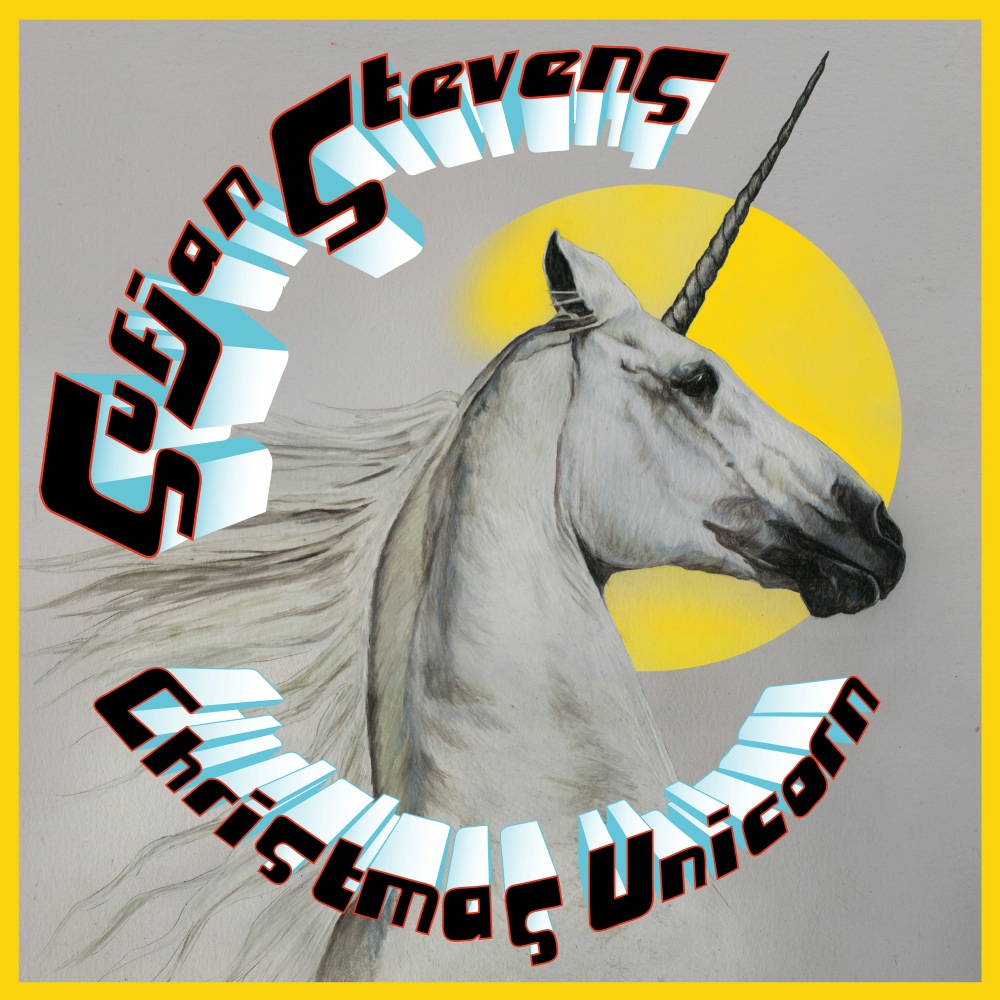
3. Christmas Unicorn – Sufjan Stevens (traditional?)
He has done so many wonderful Christmas songs that I couldn’t stick with just one. Where his take on ‘Lo How A Rose E’er Blooming’ was everything quiet and beautiful, this is everything glorious and majestic. It’s huge and crazy and weird and absurd. And, after about eight minutes, you suddenly realize that the synths that have started to take over the song are now providing the melody of “Love Will Tear Us Apart.” And you say to yourself: “Oh my god, of course it has always been a Christmas song. I just never knew it until right now.” It’s a piece of pure genius.

2. Oh Holy Night – traditional
Of all the classic Christmas carols, I believe this is the best. It has so many amazing lines and such a haunting, beautiful melody. The ‘fall on your knees’ line is just so overwhelming. Performers always run a risk doing versions of this song. It doesn’t lend itself to halfway measures; you’re looking for something fervent, not just something pretty. For two very different takes on that hurdle, try out these:
Oh Holy Night – Vanessa Peters

1. Fairytale Of New York – The Pogues
How could it be anything else?

It open with Shane MacGowan singing as no one else can: with a tenderness only matched by its raggedness. And then, even though you’ve heard it so many times before, you’re still completely unprepared for the way Kirsty MacColl’s voice emerges, triumphant, joyful, alive beyond words. As the verse unfolds and their voices intertwine you can almost see them, dancing together under the falling snow. It’s all there: the joy, the pain, the anger, the lost dreams, the hope, and the love. And on the final verse, when he sings “can’t make it all alone, I’ve built my dreams around you” there’s nothing left to do except weep for the sheer beauty of it all.

The tension in the song is, of course, whether to believe in the hope that they start out with, or whether to accept the pain of their conclusion. It would be a lie to pretend that you can simply wish away the bad stuff, but the sheer beauty of the song is the living proof that there must be something more.

What we hear in this song is the truest possible meaning of Christmas: a lament for the long winter, an expression of all the pain and suffering, the enduring human spirit.  It speaks to our need to share the darkness with those that we love and the hope that this will somehow renew it, and allow another year to be born in the ashes of the past. One brighter, nobler, happier, and more secure. The need to believe, to hope against hope. That tomorrow we will run faster, stretch our arms farther…And one fine morning…

Honorable mentions:
11. Christmas Wrapping – The Waitresses
12. Silent Night – traditional
13. All I Wanted Was a Skateboard – Super Deluxe
14. Little Drummer Boy – Bing Crosby and David Bowie
15. The Christmas Song – Nat King Cole


Posted in Uncategorized | Tagged , | 4 Comments

There but for fortune, may go you or I

There But for Fortune – Phil Ochs

Ezra Klein comments on Obama’s claim that inequality is “the defining challenge of our time.”

Income inequality is easy to worry about. It offends our moral intuitions. Its tears into the fabric of the American dream.

But is inequality really the country’s most pressing problem? Imagine you were given a choice between reducing income inequality by 50 percent and reducing unemployment by 50 percent. Which would you choose?

He then goes on to argue that inequality is not the “central challenge to growth” in the economy. But that wasn’t the argument. The argument is that the degree of inequality in our society is a disaster.

I would be very happy to concede slower economic growth if that came attached to massive improvements in economic equality. I happen to believe that a more equal society wouldn’t necessarily restrict growth (and might well improve it), but even if it did, that’s a trade I would take every day of the week and twice on Sunday.

Perhaps it’s just my Rawlsian inclinations here, but it does not seem particularly radical to me to suggest that improving the condition of those at the bottom of the economic hierarchy is far more important than a system-wide goal of growth.

Posted in Uncategorized | Tagged | Leave a comment

Self-preservation is a full time occupation

Talk to Me Now – Ani DiFranco

John Dickerson posits that Congress could be improved if its members were forced to play a cooperative ‘escape room’ game, like the one he played earlier this week:

This week, I volunteered to be locked in a room with 10 other people to play an escape game. It was fascinating and great fun. In the United States Senate this week, they were also playing a locked room game. Senators were trapped in a spite-fest that kept them in rare marathon sessions, through the night. In our attempt to get out of the room, we cooperated, spoke only when necessary, and focused relentlessly on progress. In the Senate, they were doing the opposite. Perhaps they could learn something from our experience.

Okay, he’s obviously being a little facetious here, but the general point is still being made earnestly. And that goes as follows:

What if Democrats and Republicans were broken into little bipartisan teams and forced to play our game? The urgency of the task would force them to put away their speeches and focus on progress and accomplishments.

The problem here, of course, is that Democrats and Republicans both already want progress and accomplishments. That’s pretty much their sole motivation. The reason we have a problem is that they genuinely disagree with one another about what constitutes progress.

This dream that everything wrong with Washington could be solved if everyone just liked each other stems from a rather fundamental misunderstanding of effects and causes. Everyone hates each other because they want radically different things, and on any question of significant importance owe about 10,000% more to their party than they do to their colleagues. This means that there is very little value in cultivating good working relationships with the other party. Because those working relationships – the shared ability to ‘get things done’ rather than focus on securing your own objectives – is liable to get a Tea Party challenger rumbling against you in the primary.

If you want a more functional Congress you either need to make sure both houses are run by the same party (preferably with a president, too), or change our actual institutional structure. And, to be honest, even that might not get it done if that party is the current Republican Party. So your actual best bet for fixing things is to vote against the far right candidates and communicate to the ‘establishment’ Republicans that they might someday be allowed to function as a political party willing to trade goals in order to achieve positive sum results. Right now, the Republican Party is motivated almost exclusively by the overwhelming fear that anything the other party likes even a little bit is unacceptable. For them, that’s the definition of ‘progress.’ Until you can convince them that ‘progress’ means general improvements in the good for people across the spectrum of political opinion, well, no amount of hang-wringing about ‘people in Congress just can’t seem to get along’ is going to accomplish much.

Posted in Uncategorized | Tagged | Leave a comment

Your voice is soft like summer rain

I would never have guessed that one of my favorite songs of the year would be a remix of a Dolly Parton song.  Or that another one of my favorite songs of the year would be a cover of a Dolly Parton song…by Dolly Parton.

And yet here we are.

“Jolene” is probably her best song to start with, but the full extent of it’s awesomeness only revealed itself to me through the medium of these two wonderful interpretations.

Jolene (Kygo Edit) – Dolly Parton

Kygo is a Norwegian music producer, with an incredibly deft hand for remixes (check them all out on Soundcloud – free downloads!), something which is incredibly apparent here.  It takes that slinky guitar line and transforms it in beautiful dance beat, creating a far more expansive platform on which to rest Dolly’s wonderful voice.  It only took one time listening to this version for it to become the definitive take in my mind – and it makes me wonder what kind of amazing music might have come from her if her jump from country star to mainstream pop star had taken place today, rather than 40 years ago.

And then we have this utterly revelatory bit of musical illusion: simply take the original 45 recording and slow it down to 33. The result: a completely different song!  This “Jolene” is a quiet, smoky, haunting track.  Where the original is fundamentally defined by its unity of pain and submission – it pleads, insists on a human response, demands an expression of empathy – this version is defined primarily by its mournfulness. It is full of lamentation and weary acceptance. And most impressively, it now sounds like a male voice singing.

It’s a testament to her vocal performance that it can survive this transformation with such success.  My experiences performing this experiment with my old 45s were almost all fruitless, because when you slow down a standard vocal track it basically just turns into sludge.  See, for example, this version of 12:51 by The Strokes.  But Dolly’s voice simply unfolds itself and you can suddenly hear a bunch of previously invisible little flourishes.

Posted in Uncategorized | Tagged | Leave a comment

You’re starting to break me, you’re on your way

Another Day – Carousel

If you like feeling happy, you will like this song.  It has all the wonderful density of a great synth track combined with all the organic urgency of a classic pop song.  The touch is light, the vocals smooth, and the chorus as sweet as honey.  It’s a bit of a cliche to call an electro-pop song ‘dreamy,’ but…well…this song is pretty dreamy.

“Another Day” is from the lovely Palms EP.

Posted in Uncategorized | Tagged | Leave a comment

He’s the laureate of the Granite State

Pink-Slips – Okkervil River

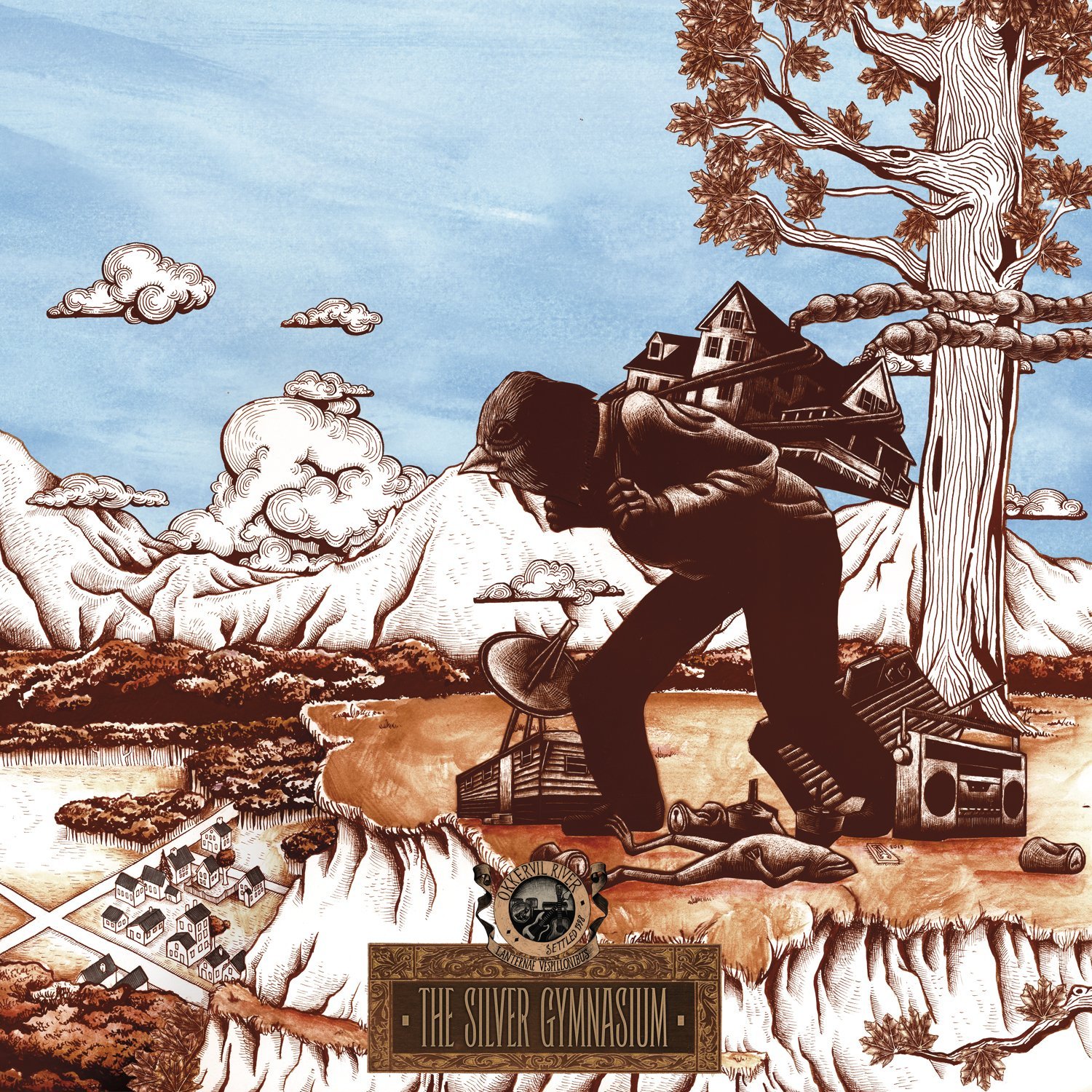
Let’s start by saying that The Silver Gymnasium is a very good album.  It reverses the decade-long trend of each successive Okkervil River album being slightly worse than the one that came before.  And while it still remains a cut below The Stage Names, and therefore stands cleanly on the far side of the banks from their trio of early-career masterpieces, I would listen to the argument that it’s their best outside of that group.

It’s a record about nostalgia, and the way we are shaped by the places that we grew up.  For Sheff, that place was Meriden, NH – and this album explores his complicated relationship with that hometown.  It’s a wonderful concept and helps to give this record the lyrical backbone that had gone somewhat missing in their past couple releases.

It also provides the musical backbone, with results that are somewhat harder to parse. For a record about the 80s, it makes perfect sense that a lot of the big musical brushstrokes of that era would feature prominently.  And that’s not a problem per se.  In the same way that people often get Springsteen wrong by thinking that the bombastic style somehow erodes the authenticity of the message, it would be a mistake to write this record off.  The power pop stylings that drive the record, and the smoothly polished sheen that accompanies them, are clearly being employed with a subversive twist.

By subversive, I don’t mean that it’s supposed to be a critique.  This is not an ironic overidentification with the John Cougar Mellencamps of the world, but instead is a kind of nostalgic affiliation – which is also distinct from a full-throated endorsement.  When it works, it manages to be both a gentle satire on the genre while also still itself being a part of that genre (think: The Princess Bride or Futurama, which satirize because they love).  And, after all, this album is ultimately about nothing other than the strange allegiance we sometimes feel between our present self and a past that we would not wish to re-live yet still feel a powerful nostalgia for.

We hear this stated most explicitly on the wonderful “Pink Slips,” where Sheff expresses his complicated feelings for places that were ultimately defined by sadness.  It’s a strange feature of the human animal that we often feel a loving connection to the places that birthed us, the references that shaped us, and the things that we have now outgrown.

At its best, this is simply a record about moments, about memory, and about the poetry of imperfect understanding.  “Black Nemo” conveys all of these with a sort of gentle urgency that is sneaks into your consciousness.  The lyrics are so densely constructed that it took me many listens to begin unpacking them.  And even after hearing them dozens of times, I’m not really much closer to constructing a story for them.  Instead: they speak to me about the intense particularity of our own experiences, the pieces of our past that we feel but could never manage to truly explain.

There is a gesture toward the fantastical imagination of youth, toward the idea that the utterly mundane experience of growing up, somehow, for each of us manages to feel special.  Because, weirdly, it is.  The beaches we walked down, the songs we listened to, the long drives with our parents, these seemingly unspecific and meaningless events all still managed to build an entire world, a human consciousness, a completely unique and individuated identity.  They constructed the eyes through which we see the universe, and therefore in a strange way, built an entire universe.

Posted in Uncategorized | Tagged , | 1 Comment

No radio can drown it out

Come Back Big Brother – The Rutabega

I feel like the dominant trend in music these days is the power of cool.  Synths, sleek rhythms, laid-back beats: these are the sounds of the millennium.  Even the return of disco, which seems to have reached critical mass sometime in the spring, has been all about its re-birth by way of neo-European sensibilities meant to position it as the progenitor of EDM.

And I get why this is appealing. There’s something, well, inestimably cool about coolness. But when you get down to it, there are few things I want more than someone with a guitar, a bunch of rough edges, and a whole lot of feelings.

And so I am filled with joy to hear this album, of passion, of endeavor, of heartbroken love and impossible desire.  In the midst of a sea of detached coolness, The Rutabega stand tall, a lighthouse in the dark, holding up a flame.  Brother the Lights Don’t Work is a marker which simply says: we remain, we keepers of the faith, unbowed and unyielding.  And there is a warm port in the storm for any who would come join us. 

This is communicated in the most simple form possible. These songs feature one set of drums, one guitar, and yet manage to crash as heavily as a harvest thunderstorm.

This all is distilled most fully on the glorious “Come Back Big Brother.”  Its centerpiece is a staccato guitar line that rings like it was played by Johnny B. Goode, and which reminds me of everything that has ever been great about rock and roll.  By comparison, “Through the Holes in the Floor” is far quieter but no less moving.  It features a more gentle and jangly guitar line and feels like wrapping yourself up in a blanket on a chilly autumn evening.

The essence of the album, though, is the epic, world-defining 12 and a half minute long “Turn on the Summer,” which sounds like everything wonderful about Sunny Day Real Estate collapsed into a single track.  It develops out of a deceptively low-key riff, and marches at a stately, almost austere pace.  But with each passing minute the tension grows and grows, until the guitar notes are falling all around you, as if the sky itself were a huge pane of glass that has shattered and is now crashing to earth.

And lord almighty if it doesn’t sound good.

Posted in Uncategorized | Tagged | Leave a comment

Praise the water under bridges, the time they say will heal

New Lover – Josh Ritter

Of all the reasons to write a song, few make for better material than the broken heart.  Some of the all-time great records have been the soundtracks to the darkest days of crumbling relationships and divorce.

On The Beast In Its Tracks, Josh Ritter gives us his own contribution to this genre.  But, as you might expect from one of the finest storytellers in music, the result is anything but standard.  While the breakup record traditionally dwells on the darkest period of soul-searching abjection, Ritter gives us something very different: this is a record about that strange period that follows loss.

When you are in the midst of such loss, it dominates your entire world.  It seems impossible to do much of anything, because (as Elliott Smith once mused) everything reminds you of the person who is no longer around.  It drains the color from your world.  But, because we are incredibly resilient beasts, that moment eventually passes.  It’s not quite dawn, because the pain is still quite fresh.  But it no longer dominates your thoughts.  You can go hours, even days, without thinking about it.  And we discover that our life is still out there waiting to be lived.  There are new people to meet, new loves to consider.

This is a record about that time. It’s characterized by a complicated welter of emotions, and Ritter does a wonderful job communicating the diversity of feelings.  There’s wry reminiscence, a growing understanding that maybe you yourself bear some blame in what took place, a sadness that aches but doesn’t burn, and no small amount of tears.  It’s an ocean of bitterness navigated by a few sturdy vessels of forgiveness.

And the genius of this record is that it’s just as much about new love as it is about loss.  Ritter sings from the perspective of a man who has found someone new, who is beginning to see the endless new possibilities that promise to emerge on the new path he is walking.  And yet: there’s a certain desperation in those words.  It often sounds like someone doing everything he can to convince himself that he’s happy, that this new life is what he really wants, and that he’s over the pain.  But the very fact that he needs to sing about his new love to his old love shows that he is far less removed than he would like to imagine.

There are new simple stories here; there is only the difficult work of rebuilding your world.  And probably the biggest message here is simply that he needs to sing these songs, because the very performance is what will heal him.  To offer forgiveness and kindness, not because you completely feel ready to do so, but simply because it’s the only way to eventually be able to forgive yourself.

You can hear all of this most clearly on “New Lover” in which Ritter insists on generosity: “I’ve got a new lover now, I hope you’ve got a lover too.”  He acknowledges his own part in the mess, laments that he has spent so long being so angry, recognizes that he needs to simply look back on the good times and accept that they are now gone.  And there is a tremendous amount of maturity in it.  All of which makes the final lines ring so perfectly:

I hope you’ve got a lover now, hope you’ve got somebody who
Can give you what you need like I couldn’t seem to do
But if you’re sad and you are lonesome and you’ve got nobody true
I’d be lying if I said that didn’t make me happy too

It is a frank acknowledgement that recovery is a messy business, not something achieved in a single bound.  And it provides the perfect mediating force to unite the album’s optimistic moments (“Joy to You Baby” is an incredibly generous and honest expression of love for the person who is gone) and its other tracks that express a muted but still seething anger.  These sentiments do not contradict, he tells us.  We can feel them both.  And indeed, the forgiveness of “Joy to You Baby” is far more powerful because it comes from someone who is still full of hurt.

Posted in Uncategorized | Tagged , | Leave a comment

My long-stemmed loneliness, your beck and call

Oh Catherine, My Catherine– Widower

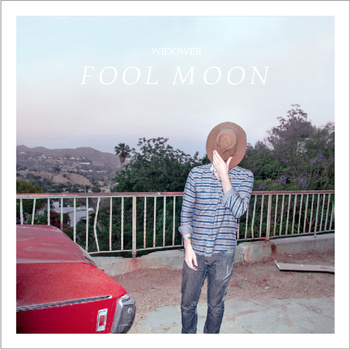
The rain has finally come.  After what seemed like an endless summer of dry skies and sunshine, I’m reminded of what it feels like to walk through puddles, to feel the water dripping down my neck, to worry about tracking mud back into the house.

So, on a day like today, there’s nothing better than a quiet tune of autumnal folk straight from Seattle. This is a song about sadness and loss and all such slings and arrows.  And there’s nothing finer on a gloomy November afternoon.

The record is called Fool Moon.

Posted in Uncategorized | Leave a comment

And the angel’s body was bared, and he was clothed in light so that eye could not look on him

Isjaki – Sigur Ros

I think this is the best Sigur Ros album yet. It still has all the features that have made this one of the most distinct bands in the world: the soaring incomprehensible lyrics, the sweeping soundscapes, the orchestral movement. And yet, this doesn’t sound like anything they’ve done before. It’s heavier, darker, perhaps even more beautiful in a strange sort of way.

The drums have that sludgy feel that you expect from industrial music, and the guitars also often feel like they owe a debt to that genre. And yet, where industrial music draws inspiration from the rote, often relentless, application of mechanized force, Kveikur sounds more like the internal mechanisms of the human body—the pushing and pulling of lungs driving oxygen through its channels, the cracking of fingers in anticipation of action, the insistent heartbeat of someone filled with terror, the relentless will to press oneself to the limit.

Brennisteinn is the opening track and in some ways the centerpiece. It is loud; it is aggressive; it is beautiful. It lays down a marker that something very new is taking place. This is followed by Hrafntinna, which combines the traditional elfin vocals from Jonsi with a metal foundation. It’s full of anxiety and a sort of inarticulable terror. And that metal impulse is given the full treatment on the title track, which snarls and bites in a way I never thought I would hear from this band.

These darker undertones are balanced by some more traditional songwork as well. Stormur finds Jonsi sounding the most similar to the previous records, but the driving instruments prevent it from descending into fey ethereality. And Rafstraumur sounds, if anything, like an M83 song, with that gauzy texture and quick pacing.

Standing above all of these, though, is Isjaki, the most straightforwardly pretty track on the record and also possibly the most transcendent.  Where much of the rest of the record seems defined by the sounds of tension, of bodies crashing together, of pistons and joints and explosions, this sounds like nothing except escape.  It just drives upward and onward, asking more and more and refusing to listen to cautionary notes. It pictures a bright blue beyond and will stop at nothing to find it. Somewhere beyond us lies grace, if only we can find it.

Posted in Uncategorized | Tagged | Leave a comment