Top 10 Tom Petty songs

This is a pretty diverse list, with some of his big hits, and a few that are pretty minor parts of the catalogue. Eight different albums make it into the top 10 (with one album placing three in the top six). From that you can probably guess my favorite Petty album. But for second favorite: that’s a much tougher call. I am tempted to say Damn the Torpedoes, but I could equally make an argument for Full Moon Fever or Hard Promises or even Echo. The point being: he’s had a long and productive career with a lot of different peaks, but not really any big valleys.

10. Listen to Her Heart (You’re Gonna Get It!)

There’s nothing especially complex here. It’s about a proto-80’s jackass trying to steal a girl with promises of cocaine and the easy life. Which is a nice demonstration of the sort of world that his characters tend to inhabit. Although literally it’s actually directed at Ike Turner who was apparently hitting aggressively on his wife. Anyways, this song makes the list almost entirely because of the guitar. It’s probably the best example of the classic Petty jangle.

9. Keeping Me Alive (Playback Disc 5: Through the Cracks)

This is an unused song from the Long After Dark sessions. That album is among my least-favorite of Petty’s, which makes sense, I suppose, since he inexplicably left both this song and “Turning Point” off of it. And both of those songs are better than anything that did make it.

Petty says this song was him trying to channel the Everly Brothers, which I think is spot-on. Of course, this is the Everly Brothers as interpreted by Tom Petty, so it’s a big more jangly and a bit more countrified. In terms of theme, it’s got a very Springsteen vibe: life may be tough, things may not always make sense, but he’s got his girl, and that’s the only thing that ultimately matters. And, like with Bruce, you can’t help but wonder if any of this will last, but you just have to accept that it might not and that these moments of happiness are enough.

8. Echo (Echo)

This song was written in the midst of Petty’s divorce, and you can really hear the anguish. Still, it’s not so much ‘about’ the divorce as it is about a general feeling of pain and loss. I hear hints of anger and recrimination, but ultimately it’s more about lamentation. Both parties want to make excuses, want to rescue what used to be, but all they can do is repeat the cycles of hope and failure (the same sad echoes). You want desperately to find a way to make it work, but it just can’t…

7. Even the Losers (Damn the Torpedoes)

If Keeping Me Alive is Petty at his closest to Springsteen, this song helps to really clarify the crucial differences between them. Thematically, it kind of fits into the Springsteen oeuvre. The difference is that even Petty’s most heartfelt love songs are told from the perspective of loss. This is a song about young kids in love, and the seemingly endless joy to be found in sharing the world with someone. But it makes no pretension that this love is redemptive. It doesn’t fundamentally change them, and they don’t expect it to. It’s just that ‘even the losers get lucky sometimes.’ What’s more, it’s told in the retrospective. She’s gone, and all he can do is point to the good times in desperation.

In some ways, this is deeply pessimistic. And yet, somehow it doesn’t feel that way. I think it’s in part precisely because the characters in the story are just real folks. Because they didn’t dream the heroic dreams, their love can simply be a moment of joy. A moment of joy which happens within a life equally full of pain. There’s no grand meaning to it all; it’s just life…

And, in a strange way, that’s what sets it free.

6. To Find a Friend (Wildflowers)

I love every single thing about this song, but it’s that little piano interlude after the second chorus that turns this something truly special.

5. Letting You Go (Hard Promises)

It’s a really touching portrait of someone who has lost love, but can’t quite accept it. In a broader sense, it’s about how hard it is to get on with our lives after a great loss. While there is a brief bridge that sounds a little more like the “normal” Tom Petty stuff from this era, the rest of the song is a little bit gentler. The music is warm, and often makes me think of sitting in a big chair with blankets wrapped around me. The keyboard, in particular, helps give the song a firm foundation. And the guitar joins for an occasional bubbly burst to keep you from getting too down. Petty’s voice is emotional, but not overwhelmingly so. He expresses sadness, but is pensive, contemplative more than he is broken apart.

This feeling breaks apart a bit during the previously mentioned bridge when he lets it all out and asks plaintively “What about the broken ones? What about the lonely ones? Honey I’m having trouble letting go.” When the warmer, more comforting sound returns, it eases you back from the edge. As the song fades out over the “oooo, oooo-oh-ohs” you’re left with some feeling of hope that “off in the distance, somewhere up the road” there really is “some easy answers for the tears you’ve cried.”

4. Crawling Back to You (Wildflowers)

Each verse could be connected, or could be seen as a completely different mini-scene. The quick sketches suggest some deep melancholy, some unredeemable sadness that resides in the relationships between these characters. And, the chorus is a simple refrain, “I keep crawling back to you,” which hints even more at the possibility that love, in this instance, is a life-raft where we simply try to weather the storm. Long after the genuine feeling of love has faded, we still return because the terror of facing the world outside is even worse than the dull pain of our lives. And yet, all hope is not lost. Some of the verses suggest happiness:

Hey baby, there’s something in your eyes
Trying to say to me
That I’m gonna be alright if I believe in you
It’s all I want to do

This is to say that “crawling back” can also be the desire to make things right. If he can still see the spark of love in her eyes, then there is still something to believe in. The way he sings the chorus makes me believe that this is the truth. It doesn’t come with a sense of self-loathing or frustration. Rather, there is a hint of wonderment that, after everything, there is still someone there to turn to.

These thoughts are guided along perfectly by the sound of the song. It begins with a long intro, featuring a slow cascading series of notes in a minor key on the piano. To me, this riff sounds like the breaking of a wave. It rises almost imperceptibly and then falls. It glides up the shore and then recedes, pulled underneath the swirling water. The piano is joined by a guitar which punctuates the highs and the lows. Throughout the song, the same basic riff remains the same, though in a number of variations. At times it returns to the feeling of the introduction, like a pond on a still day. At others it is tempestuous and stormy.

Or perhaps it sounds like a breath. As the song begins, it is a long breath, in slow-motion, inhaled and exhaled softly. Then, at the 44-second mark, the drums appear and the pace quickens and the song begins to thump like someone out of breathe from running.

Whichever metaphor you prefer, the general mood of the song remains the same, while the shifts in tone create a great deal of minor variations on the theme. The notes are so downcast that one cannot help but feel that there is a great deal of sadness, but it is never overwhelming. The song is simply too beautiful to believe that there is no hope in the world.

3. American Girl (Tom Petty and the Heartbreakers)

Petty once remarked that this song sold thousands of 12-string guitars, which he thought was pretty funny because it’s actually just two regular six-string ones. But you can understand why people would have gone nuts over the sound. Lots of people had done jangle before, but it had never sounded like this.

This has always struck me as one of those songs that basically everyone loves. Old rockers, young dudes, even the punk kids. It’s just a glorious song.

2. Free Fallin’ (Full Moon Fever)

For a significant portion of my young adulthood, this was my absolute favorite song in the whole world. It felt like the most romantic, the most beautiful, the most pure thing I had ever heard. That little guitar riff, so simple and yet so ineffable. And when he sings ‘freeeee fallin’ it literally makes my whole body feel lighter. I can almost feel myself drifting on the breeze. I’m much older now, and hopefully a little bit wiser. But there’s still a part of me that simply cannot believe how good it feels to experience the final minute and a half of this song. I hope I never become so jaded that this song doesn’t make my whole body sing.

And yes, I know that the most direct reading of the lyrics is pretty pessimistic. I appreciate that, and it’s part of the larger meaning of the song. But honestly, I mostly just listen to this because of the way it makes me smile.

1. Wildflowers (Wildflowers)

I’m not sure there is a more beautiful song in the world.

It’s so simple, perfectly intimate. I can still remember how I felt the first time I heard it: full of wonder, and just a little bit scared that if I moved the spell would break and it would turn back into just another song. As I look back, I am starting to realize that it was almost twenty years ago. And I feel like the song has only grown up with me.

You know, in some ways, my top two tracks almost work as mirror images of each other. Free Fallin’ is a song for a young man, full of hope, and just a little bit unaware of the pain in it. He’s a ‘bad boy, for breaking her heart’ but all the implied damage being done is just completely washed out by the deep feeling of love that is embedded in the very essence of the song.

Meanwhile, Wildflowers is an old man’s song. It’s the feeling of love after the passion has gone. It’s a goodbye to someone you care about but know that you can’t hold onto. It’s the sort of song that only grows more poignant with every year that passes. If I had made this list even a few years ago, Free Fallin’ would have topped it. But now…as much as I still love that song, I hear a little more of myself here. I do hold out hope that I will always be able to live in a place where I feel free…

Honorable mentions:
11. The Waiting (Hard Promises)
12. Turning Point (Playback)
13. A Higher Place (Wildflowers)
14. Mary Jane’s Last Dance (Greatest Hits)
15. All The Wrong Reasons (Into the Great Wide Open)
16. Learning To Fly (Into the Great Wide Open)
17. Room At The Top (Echo)
18. Louisiana Rain (Damn the Torpedoes)
19. Southern Accents (Southern Accents)
20. A One Story Town (Long After Dark)
Posted in Uncategorized | Tagged , | 9 Comments

Top 10 Bruce Springsteen songs

There’s a long history of American storytelling, stretching back through folk heroes like Woody Guthrie to authors like Steinbeck and the people who moved out to homesteads on the frontier, braving the cold and the wild all in the hopes of finding something better.

It’s a noble legacy, but also a deadly one. Grand dreams sustain us in our hardest times – it’s what makes us want to believe, need to believe in the myth of Tom Joad – but those same dreams also contribute to the bust and boom cycles that brought on the Depression in the first place. And that long line of Okies trudging across America desperately searching for a job or a full meal – if you trace it back far enough, you’ll find yourself in the midst of one of Jay Gatsby’s famous parties.

That’s what Springsteen captures: the enigma, the longing, in all of its passion and full belief. And it’s what rescues the bombast of “Born to Run” or “Thunder Road.” These songs explode with a fervor that lays bare all that is buried in their subjects. Youth, wild abandon, a belief that true meaning can be found on just the other side of the hill. And a secret terror that all those dreams may have already passed you by.

All of which is to say: there is genuine magic here, if only we remind ourselves to hear it.

Mandatory disclaimer: these are simply my favorites. I make no claim about the objective list of their ‘best’ songs. I can only tell you what I like.

10. Land of Hope and Dreams (Wrecking Ball)
It’s a tour de force. You get basically the entire Springsteen mythos here: trains, lost souls, community, redemption, and a killer saxophone solo from the Big Man (one of his very last, sadly). The fact that the mode of reference is almost anachronistic these days (who catches a train to their salvation in 2013?) is actually part of the point. It’s a call to remember what is great in our past, not to say that we can go back, but to caution us about what it means to move forward.

9. Youngstown (Live in New York City)
The acoustic version of this song is fine. But it doesn’t really convey the feel of the place. Here, with dirty guitars and an ominous, looming sense of menace, is the real Youngstown. The history just seeps out of it like a thick sap. And the anger is evident in his snarl.

If “Land of Hope and Dreams” is the positive expression of this idea—that there will always be room in this great country for those willing to strive for it—“Youngstown” tells the other side of the story.

And again, of course this is nostalgia. It’s not meant as a political treatise on the political economy of coal, nor is it a demand for the restoration of a city that is gone forever. It’s just the expression of a palpable frustration. And it’s a call for us to exercise our memory, to recognize those who have been left behind in this brave new world. It’s all too easy to just cast them aside as the detritus of progress. But everything we are now depends on the sweat and the blood and the pain of those who came before.

8. Darkness on the Edge of Town (Darkness on the Edge of Town)
The vocals are shredded. The soul is shredded. He’s on that hill because what else can you do? In all the things that we want, in all the things that we can’t have, there’s a great darkness. For those who find themselves living in the midst of that darkness, somehow everything obtains a new clarity.

It’s not a bad place. But it’s not a good place either. It’s the place where concepts like good and bad lose their hold on us. There is only the pure wanting, the desire, the need for something. We don’t know what it is, but it drives us forward. The darkness is the place where we look deep into ourselves and see the blank spaces. It’s where secrets come to life and are burned away in a fire.

It’s where we see our true selves.

7. Dancing in the Dark (Born in the USA)
I know this one divides opinion a bit among serious Springsteen fans. But I care not one whit. Of course it’s a product of its time, with the synths and the straightforward pop sensibility. And it was written explicitly for the purpose of generating a strong single, which suggests a degree of crass commercialism. To that I say: so what? It’s a beautifully crafted song, one of the prettiest melodies he has ever written, and a fine vocal performance. And the background for its creation—Jon Landau’s insistence that Born in the USA needed a standout single and Bruce’s frustration with the demand—actually just makes me like it more. It’s a window into his own creative process as much as it is a story about someone else.

6. Born to Run (Born to Run)
He set out to write the greatest rock and roll song of all-time. And you’d have to admit that he just about hit the mark. It starts big and only gets bigger. It famously took literally months to produce, and you can hear it in the depth of the sound. It sounds huge, impossibly dense, and yet somehow carefree.

This song, as much as any Springsteen track, invites misunderstandings. You can read it as an overly simplistic glorification of the misfits. And yes, it does seem to suggest that any problem in the world can be beat if you just get yourself out on the road.

But, if you dig in just a little bit, you’ll discover there’s a lot more going on here. Lines like “Together Wendy we’ll live with the sadness / I’ll love you with all the madness in my soul” suggest that the redemption promised here is temporary at best. You dream crazy dreams, you love like there’s no tomorrow, you drive away into the night—not because you think this will make the sadness go away, but just because if you don’t keep striving the sadness will overwhelm you.

There’s no perfect life waiting around the corner for them. They will find pain and sorrow. But in the face of that pain the best they can hope to do is to refuse to give up.

5. Badlands (Darkness on the Edge of Town)
If “Born to Run” is the greatest rock song ever made, this is somehow something even better. To me, these two songs mark something wonderful in his artistic evolution. Born to Run is a triumph. It’s the sort of album that sings with the voice of Homer. It paints in huge strokes, and in highly stylized forms. And it’s a testament to Springsteen that he never tried to make something exactly like it again. The follow-up, Darkness on the Edge of Town, is much darker, much more narrowly drawn. And so this is what happens when you channel all that passion and energy and the pure forces of nature through the parched lands of our national spirit.

“Born to Run” is rock and roll for the dreamer in all of us. It tells us that we need to dream in order to survive. And, if we dream hard enough, we just might “get out while we’re young.” “Badlands” is rock and roll for those who have come to realize that there’s something beyond the dream. And it’s simply the “notion deep inside, that it ain’t no sin to be glad you’re alive.” When you live in a world that beats you down mercilessly, you might come to believe that dreaming is the only escape. But here, Bruce is telling us, in the Badlands, we start to realize that escape is the wrong way of thinking about it. We don’t need to escape. We just need to “go out tonight and find out what we’ve got.”

When I’ve seen Bruce live, this song was without a doubt the most exuberant. And I think it’s because “Badlands” is fundamentally about coming together, about shared belief in something greater, about the invitation to live well in the world we have made for ourselves. “Born to Run,” for all its grandeur and wonder, is fundamentally about dissatisfaction, where “Badlands” is about the simple honor of a life well-lived. It’s not a ‘happy’ song, but it is a joyous one.

4. The River (The River)
In some ways, this is the companion piece to “Born to Run.” Here the subject is what happens to people once they realize that their youthful dreams are long gone, but nothing is there to replace them. I’m not sure there is a line in the history of rock and roll that is more heartfelt and deathly-sad than the bridge in this song:

But I remember us riding in my brother’s car
Her body tan and wet down at the reservoir
At night on them banks I’d lie awake
And pull her close just to feel each breath she’d take
Now those memories come back to haunt me
They haunt me like a curse
Is a dream a lie if it don’t come true
Or is it something worse?

It just hurts so much, to know what it felt like to be happy, and to know that it will only ever be a cold and lifeless memory. To look at someone and see in them the person you used to be, that you still wish you could be. How can we bear the pain? How could you not grow to hate that person who represents the iron cage that has been dropped around you. Their version presence mocks you. And yet, would you really wish to not have those memories? Would that make it any better?

3. My City of Ruins (The Rising)
He wrote it about a neighborhood falling apart but I’m not sure it would be possible to write a better song about 9/11. Possibly the most emotional musical moment of the decade is when he asks: “Tell me how do I begin again? My city’s in ruins…”

That it wasn’t written about 9/11 almost makes it better, since the tragedy of 9/11 has always been the way it inflicted itself on us in the places that felt the most safe, the most personal. It’s about the loss of a specific home, but that allows it to stand in for the loss of home on a much grander scale. It could be about Asbury Park; it could be about Ground Zero; it could be about New Orleans after Katrina; it could be about Flint after the decline of the auto industry. No matter what it means for you, it’s about the need to rise up out of our sorrow and pain. Out of the ashes, we will rise again.

2. Backstreets (Born to Run)
Just listen to the poetry. I don’t know what a “soft infested summer” is, precisely, but I know exactly what he means nonetheless. And the tiny details, unexplained, allow the story to emerge in its own way. We get specific names (Stockon’s Wing, the Duke Street Kings) without any clarification. It’s a perfect case of simply showing rather than telling. We don’t need to know what those things are – we just need to know what it felt like.

And the ambiguity doesn’t end there. There’s a core question at the very heart of the song. What precisely is the relationship being discussed? The most straightforward reading is simply one of young love. But there’s nothing here that actually necessitates romantic interest. It could also be simply a story about growing up, the transformative feeling of realizing what it means to have a friend with whom you can share everything. And, of course, there’s the ambiguity in the name. It’s simplest to read Terry as a woman, but there’s no reason it couldn’t be a man—which would add another layer to the explanation for them “hiding on the backstreets.”

After two verses of set-up, the inevitable breakdown hits just about as hard as any piece of music I have ever heard. Even on an album well known for bombastic moments, there really isn’t any other that comes close to the epic feel of this verse. Bruce singing “blame it on the lies that killed us, blame it on the truth that ran us down” is the sound of a heart being torn to shreds right in front of us. It’s almost impossibly intimate and yet also feels universal. And again, we don’t really get the details. This isn’t a blow-by-blow account of what went wrong. It’s about the feeling. The story is told just beyond the actual events. What lie that killed them? What truth that ran them down? Who is the guy? We never find out because this isn’t a story driven by the plot. It’s a painting, or a series of photographs, meant to capture the flickering moments of pain.

This song would be a complete and perfect work of art if it only contained those opening three verses. But, because Bruce is Bruce, he gives us the coda to tie it all together. Laying in the dark, thinking about what has passed. And his memory of what it was all about:

Remember all the movies, Terry, we’d go see
Trying to learn how to walk like the heroes we thought we had to be
Well after all this time to find we’re just like all the rest
Stranded in the park and forced to confess

To realize that you are only a character in your own story…it could lead you to doubt whether there really are heroes in this mean old world. But, and here is the essential and wonderful ambiguity of the song, we never really find out where it all goes. If it’s all a matter of “hiding on the backstreets” what precisely is he hiding from? Is that part of the magic of the backstreets, that they are always there for us as a sort of refuge? Or is hiding the problem: that no matter what new troubles we face, we can always run away from them to hide on the backstreets? Or both? We don’t need an answer: we just need to keep asking.

1. Thunder Road (Born to Run)
It’s an entire movie in four minutes and fifty seconds. And not just any movie, this is the Casablanca of rock and roll. All the tropes, all the references, all the things that you’ve heard in hundreds of songs since then…this is where it all comes from. If it sounds tired or worn down, it’s only because you’ve replaced the real thing in your imagination with the imitation.

And if this is where the tropes begin, if this is the center of the Springsteen universe, it’s worth pondering for a little bit what precisely they mean.

My theory is that the Springsteen tropes aren’t meant to be understood in isolation. They work together, over the course of decades, to build up an entire universe. The guy who shows up at Mary’s door with the promise of redemption inhabits the same world as the Vietnam vet who lost his brother at Khe Sanh. And they both stand in as archetypes for the guy who is trying to write his novel and just can’t make it click. The fellow in a union coat standing in the county courthouse with his pregnant girlfriend may have been friends with the singer of “Thunder Road.” And they both probably drive their cars around at night feeling lost in “Racing in the Street.”

Cars mean freedom, but they also represent wasted years spent on ephemera. The train is the universal metaphor—it takes us into the land beyond, brings us all together, forms the connective tissue of our greater psyche. And these vehicles scream to us of salvation and redemption. But the broader point, made clear only from the distance as the whole narrative blends together, is that redemption was never in the thing. Redemption is the thing, and it comes from our capacity to believe.

Here, he sings “All the redemption I can offer, girl, is beneath this dirty hood,” and if you want to be ungenerous you would interpret that as a belief that the car is some simplistic metaphor for freedom. That the American Dream is found in some fuel-injected engine. But that’s not the point at all. No, it’s the act of offering that matters. The substance of the offer is what gives it a narrative hook. But if you treat the hook as the thing itself, you are doomed.

Of course we can’t help but feel just a tiny bit cynical. As the credits roll and the kids drive away into the sunset, we know deep down that bad times will come to them, and probably sooner rather than later. But that doesn’t matter for the song because he’s not asking us to believe in the objective truth. He asking us to believe that the characters in the story really believe. And to remind us of when we believed, too.

The kid sits there with hand outstretched, and asks her to share his dream. But the dream is not the magic of the highway. The dream is the dreaming itself. The finding out, the testing, the endless faith in the possibility that there must be something more. And if we can’t find it here, then we just have to keep looking.

Honorable mentions:
11. Loose Ends (Tracks)
12. American Land (The Seeger Sessions)
13. Girls in Their Summer Clothes (Magic)
14. You’re Missing (The Rising)
15. Born in the USA (Born in the USA)
16. Racing in the Street (Darkness on the Edge of Town)
17. The Promised Land (Darkness on the Edge of Town)
18. Jungleland (Born to Run)
19. Atlantic City (Nebraska)
20. Rosalita (Come Out Tonight) (The Wild, The Innocent, and The E Street Shuffle)

More on Springsteen:
Springsteen and the Power of Earnestness
Thinking about Springsteen in the context of The Gaslight Anthem

Posted in Uncategorized | Tagged , | 2 Comments

Top 10 Modest Mouse songs

Mandatory disclaimer: these are simply my favorites.  I make no claim about the objective list of their ‘best’ songs.  I can only tell you what I like.  Regular readers will not be surprised to see their work from the 90s represented a lot more than their later work.  I lost my heart to Lonesome Crowded West, and while the stuff since then is also plenty good, I will always go back to my true love…

10. Night on the Sun (Everywhere and His Nasty Parlour Tricks)

Isaac’s voice is in fine form – for all the lispiness, the guy really could sing back in the day. Particularly on the “hopelessly hopeless, I hope so…for you” bit. But this song makes the list for the guitar work. It builds up languidly, but insistently. But then you get the instrumental section starting at about 3 minutes where it rings like the bells of God.

9. Doin’ the Cockroach (Lonesome Crowded West)

God this song is messy.  The guitar starts out woozy and Isaac is at his mumbly/angry best.  And then there are those drums, like cannon-fire. And the pace picks up and things start to catch on fire. But this song makes my top 10 almost entirely for the guitar in the bit that starts around 2:30. I’ve often thought of Modest Mouse in this period as playing a guitar like a serrated blade, and this is just about the perfect example.

8. Neverending Math Equation (Building Nothing Out of Something)

There’s something beautiful and terrible about the notion of life being structured by the cold inhumanity of equations, the animal necessity of survival being built into our very nature, the way this overwhelms the pretense of free will and individual decision.  The cold loneliness.  And yet, this is simultaneous with the bare animality of existence – the crude bodily reality that “the plants and the animals eat each other.”

7. Cowboy Dan (Lonesome Crowded West)

This is Modest Mouse at their most desolate.  The slow-burning frustration, the anger, the deep sense of loss.  He didn’t move to the city, the city moved to him.  So he goes to the desert, fires his rifle in the sky, says “God if I have to die, you will have to die.”  The crashing cymbals, the piercing guitar note.  And yet, there’s the interlude…where we’re just standing in the tall grass “thinking nothing.”  It’s not a resolution, or even really an escape.  But it is a moment of temporary solitude.  There’s no meaning in it, but that’s kind of the point.  In response to the aching, sullen, slow catastrophe of the modern world, thinking nothing at all is the only possible response.

6. Broke (Building Nothing Out of Something)

It opens with 30 seconds of just the guitar, dour yet engaging. When Isaac’s voice enters, it is eerie and achingly sad.  It tells the tale of self-recrimination and a life slowly unraveling.  It’s a slow descent, spiraling downward until about two minutes in, when the pace picks up and moves faster, faster, faster, until it’s one glorious mess. The drums are flailing about, the guitar is dancing, the lyrics trip over themselves trying to fit into the little bit of time and space provided for them until it all melds together into a series of riffs that hit you like gunfire. And then, WHAM, it’s over. I can’t deal with rollercoasters, mostly because I’m terrified of heights, but this song sort of makes me understand the appeal. The slow climb, the little bit of panic in the back of your mind, and then the rush.

5. So Much Beauty in Dirt (Everywhere and His Nasty Parlour Tricks)

One minute and twenty-four seconds long, and it’s exactly the right length. It’s about those moments, gone before you know it, but perfect in themselves. The refrain “so much beauty it could make you cry” is repeated a number of times, emphasizing that life is perfect in all its imperfections. The randomness, the pain, the mistakes, and the stupidity, all of these things are intermixed with the beauty, the wonder, the silliness, and the joy.

Frankly, I find this song to be far more optimistic, and encouraging, than much more explicitly hopeful songs. Perfect moments are perfect only because we all know they must end. Similarly, we all know that suffering is a part of life, but what makes it acceptable is the realization that it is transitory, ephemeral. When we let pain wash over us, it cannot last – the pure moments burst forth no matter the circumstances, if we let them. It is only when we fixate on the pain that it haunts us.

These perfect moments can happen anywhere. I find them often in music, but it can be as simple as breathing a deep breath of clean, fresh air. It can be saying goodbye to a friend. It can be a tear shed for someone that you’ve hurt. It can even be a moment of pain or sadness. What makes these moments perfect is not that they are “good” but rather that they are beautiful. And beauty is a perilous thing, as Sam Gamgee would be happy to tell us:

‘The Lady of Lórien! Galadriel!’ cried Sam. `You should see her indeed you should, sir. I am only a hobbit, and gardening’s my job at home, sir, if you understand me, and I’m not much good at poetry — not at making it: a bit of a comic rhyme, perhaps. now and again, you know, but not real poetry — so I can’t tell you what I mean. It ought to be sung. You’d have to get Strider, Aragorn that is, or old Mr. Bilbo, for that. But I wish I could make a song about her. Beautiful she is, sir! Lovely! Sometimes like a great tree in flower, sometimes like a white daffadowndilly, small and slender like. Hard as di’monds, soft as moonlight. Warm as sunlight, cold as frost in the stars. Proud and far-off as a snow-mountain, and as merry as any lass I ever saw with daisies in her hair in springtime. But that’s a lot o’ nonsense, and all wide of my mark.’

‘Then she must be lovely indeed,’ said Faramir. ‘Perilously fair.’

‘I don’t know about perilous,’ said Sam. ‘It strikes me that folk takes their peril with them into Lórien, and finds it there because they’ve brought it. But perhaps you could call her perilous, because she’s so strong in herself. You, you could dash yourself to pieces on her, like a ship on a rock; or drownd yourself, like a hobbit in a river. But neither rock nor river would be to blame.’

4. Third Planet (The Moon and Antarctica)

“Everything that keeps us together is falling apart.” In seven words, the zeitgeist of an era is summed up, setting the stage for a record that will delve deeply into our sense of isolation. It taps into the inescapable feeling that, even as the world grows smaller, the things which helped us feel close to one another are fracturing.

3. Float On (Good News For People Who Love Bad News)

This song marks a turning point.  Before this, the defining feature of the band seemed to be the overwhelming force of loneliness that comes from living within an incomprehensible universe.  It wasn’t ever quite phrased in these terms, but I would suggest they were primarily concerned with the lightness of existence, the way even the most durable things are perpetually at risk of fading away into nothing.  So here, we find them looking at this all in a new way.  If we are nothing but leaves on the wind, if life moves on a plan beyond our comprehension, maybe there’s something to be said for simply floating along with it.

I’m sad to say that the band finding a bit of peace led to them producing music that matters a whole lot less to me.  Nothing after “Float On” has ever hit me with nearly the force of Lonesome Crowded West.  But here, just as they are starting to make the turn, they hit one of their single finest notes.

2. Teeth Like God’s Shoeshine (Lonesome Crowded West)

Writing about this song feels impossible.  It’s so huge and violent and beautiful and far beyond the scope of articulation.  It’s a force of nature.  It’s the end of the world.  It’s…something more.

Unlike some guitar bands who do their damage with noise, Modest Mouse are something else. Not that they can’t get loud. But at their most devastating, the thing that truly takes you apart is the loneliness, the isolation, the spaces in between the notes. There’s an artful looseness to it – it kept you from ever identifying a center.

And it was never better expressed than on this song.  There’s the piece around 3:00 (Take ‘em all for the long ride…) which follows close on the heels of the ‘chorus’ which feels to me like it comes via a sort of jangly saunter.  Or the absolute apocalypse at 5:18, when the entire world gets torn down around you.  And bizarrely, this is immediately preceded by a quiet moment that feels like the aftermath of some great destruction.  It’s somehow perfect: the eruption is in some way caused by its own effects.

Hidden somewhere in this is true understanding. I know you better than you know yourself they seem to say. You in all your madness and confusion. This is not a comforting feeling but it is right.

1. Trailer Trash (Lonesome Crowded West)

My favorite Modest Mouse song, and the inspiration for the name of this blog. It’s about a life that doesn’t seem to be going anywhere, when you have to wonder if maybe the reason things haven’t turned out quite right is your own damn fault, not because of anything out there. I don’t find it to be a hopeless song. Lines like “Taking heartache with hard work / Goddamn I am such a jerk / I can’t do anything” suggest a deep-seated weariness, a fear that life will never be anything more than it is in this moment. And a bit of self-loathing. He sees himself and is disgusted with his inability to change.

But it’s not all doom and gloom. I like to believe that it’s a warning more than a prophecy. The song contains one extended verse which bleeds into something of a chorus, and is then repeated. Over this, the pace slows and while Isaac initially sounds emotional, maybe even a little tortured, by the end, he is just speaking the lyrics over a drum beat, and the guitars have almost disappeared. You can almost feel the burden of life pressing down. Then, however, the prettiness and weariness of the first half explode into the chaos of the second half. The drums go crazy, and the guitar riff dances around.

There are no lyrics, just the commotion of the music. All weariness is forgotten, and if you’re not quite sure where things are going, you do know that it is exciting. I like to think that’s sort of how life works. Frustration, fear of stagnation, and discontentment can be shattered. It’s a back-and-forth thing, but there’s still some reason to hope that you can learn from your mistakes and be a better person. I’d like to believe that.

Honorable mentions:
11. Polar Opposites (Lonesome Crowded West)
12. Spitting Venom (We Were Dead Before The Ship Even Sank)
13. Other People’s Lives (Building Nothing Out of Something)
14. Bankrupt on Selling (Lonesome Crowded West)
15. The World at Large (Good News For People Who Love Bad News)

Posted in Uncategorized | Tagged , | 18 Comments

Wreck our dancing shoes

Radio Song – The Felice Brothers (from The Felice Brothers)

Campfire sing-alongs from back before they were made cool by Mumford and Sons and the like. But with the substantial improvement of the accordion! It’s such an under-utilized instrument in contemporary music.

This is one of those boozy songs that just feels like it must have been a joy to record – in the long tradition stretching back to Barbara Ann.

Posted in Uncategorized | Leave a comment

But if I seem to wander off in dream-like looks

Violets Of Dawn– Eric Anderson (from Violets of Dawn)

Someone (I think it was Dylan – and it certainly sounds like the sort of thing Dylan would have said) said this song was a piece of total derivative trash with nonsense phrases meant to evoke deep thoughts, and that it gave the whole genre of folk music a bad name.

And of course, there’s something to that critique. This is the sort of song that you’d write if you were hoping to cash in on the whole raft of Dylan-lovers who had recently been turned off by Dylan’s own turn to the electric.

But you know what, the reason it sounds like that is because it’s just a damn good song. It’s precisely the sort of thing that a folk-lover full of optimism about the birth of the counterculture would love to hear. If you approach it with cynicism, the whole thing falls apart. But there’s something wonderful here waiting for you if can manage to suspend your disbelief through lines like “Oh whirling twirling puppy-warm / Before the flashing cloaks of darkness gone / Come see the no colors fade, blazing / Into petaled sprays of violets of dawn.”

Posted in Uncategorized | Leave a comment

Is it time for me to rise?

Rise – Rainer Maria

I’ve posted before about my love for Rainer Maria, who I think are one of the most underrated bands of the late 90s/early aughts. I came to them right as it seemed like they might be taking off (with 2001’s A Better Version of Me). They were being lauded by Pitchfork and they were so damn good that I just sort of processed them as a consensus great band on the way to big things.

They put out two more very good albums and then called it quits. And only in retrospect did I realize that they had never quite hit the big time like I thought.

Which is crazy, because they might well have been the best of the emo-rock bands that sprung up at the time. You want catharsis, you want hearts torn out? You want kick-ass rock songs? Then go buy yourself a couple Rainer Maria albums. You won’t be sorry.

This song is from Anyone in Love With You (Already Knows), their live record.

Posted in Uncategorized | Leave a comment

But I need you and you’re always on my mind

Impregnable Question – Dirty Projectors (from Swing Lo Magellan)

I wasn’t really able to get into the new Dirty Projectors album.  And really, I haven’t quite been able to love anything that they’ve done. But this song, precisely because it doesn’t really sound like a Dirty Projectors song, absolutely charmed me.

If I didn’t know better, I would swear this came out of the mid-60s. A little doo-wop melody, that slow-walking bassline.  And the ooooooohs just kill me.

Posted in Uncategorized | Leave a comment

I’m thinking of your wide open eyes

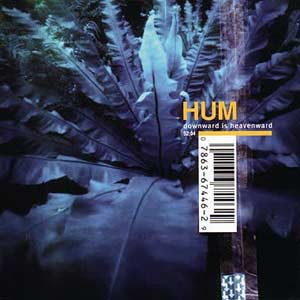
If You Are To Bloom – Hum (from Downward is Heavenward)

Big crunching guitars, a nice little groove, and a series of deft little touches on the side.  It comes out of the same Chicago tradition of layered guitars and noise that gave us the early Smashing Pumpkins.  But where Corgan and co. went toward the pop and glam worlds, Hum just churned out big old space rock.

Despite growing up in the 90s, I was never really a 90s music kid.  My first (and truest) musical love was the 60s, and it took me until high school to acknowledge that the music of my own generation was really worthwhile.  At that point, the height of ‘alternative’ had already passed.

But in some ways, that was actually kind of a blessing.  It meant that I didn’t get burned out on all the knockoffs.  Which meant I was able to come to bands like Hum with somewhat fresh ears.  And well, they really knocked it out of the park.


Posted in Uncategorized | Leave a comment

Don’t you remember love?

Time Ago – Black Lab

Hey blog, long time since we’ve talked.

In an effort to liven things up around these parts, I’ve come up with a couple projects to keep my occupied with posting for a while.

First, I’m going to write a short post (pretty much) every weekday for the next few weeks, focusing on one song that struck my fancy that day.  These will mostly be deep-cuts from old stuff.  I tend to find that after spending the last couple months of the year digging into all the best-of lists and such that I burn out a bit on the new stuff.  And I want to spend some time now just sitting back with old favorites.  So I’ll be sharing those for a while.

My bigger project is inspired by my old Beatles-lists.  While I don’t want to plan anything nearly so grand with other bands, I do want to try a much more modest project: a short list of my top 10 songs from some of my favorite artists.  Keep an eye out for those sporadically over the next month or two.

Posted in Uncategorized | 1 Comment

The platinum option and the value of executive overreach

Lucky Denver Mint – Jimmy Eat World

As our country lurches from crisis to manufactured crisis like a drunken sailor, the next big event on the horizon is the semi-annual renewal of the debt ceiling.  If you remember what happened in 2011, Republicans threatened to more or less destroy the American economy in the service of reducing government spending.  And we’ll have all that fun once again in the next couple months!

Now, the debt ceiling is just an insane piece of law in the first place.  It has nothing to do with the actual appropriation of money.  All that it does is control our capacity to borrow in order to pay off debts we’ve already incurred.  Which is to say: Congress is threatening to collapse the economy because they’re unhappy about the amount of money that they themselves have appropriated.

My current favored approach to dealing with this is the platinum coin approach.  An obscure provision (31 USC § 5112(k)) grants tremendous leeway to mint platinum coins of any denomination.  The exact text:

The Secretary may mint and issue platinum bullion coins and proof platinum coins in accordance with such specifications, designs, varieties, quantities, denominations, and inscriptions as the Secretary, in the Secretary’s discretion, may prescribe from time to time.

The idea is to simply mint a couple platinum coins worth a trillion dollars, deposit them, and presto, the debt is two trillion bucks smaller.  It’s that simple.

Kevin Drum, who I normally agree with on most questions, is growing increasingly shrill on this subject.  The thing is, while he’s wrong, he is wrong in an interesting way.

Like it or not, the debt ceiling is legal. Congress has the power of the purse. On the other hand, using a ridiculous loophole in a statute about commemorative and bullion coins in order to evade the debt limit isn’t legal. Seriously, folks: just forget it. I know I’ll never have to pay up on a bet over this since it will never be tested, but this would go against Obama 9-0 if it ever made it to the Supreme Court.

It’s time to get a grip and leave the fever swamp thinking to the tea party. This whole thing is embarrassing. It will never happen; it’s an exercise in executive overreach that liberals are supposedly opposed to; and it would never make it past a judge.

There are three important elements here.  First, the debt ceiling generates fundamental constitutional blockages.  That is: the president is constitutionally obligated to spend the money which Congress has appropriated AND is constitutionally obligated to adhere to the debt ceiling.  But these two things directly contradict.  The result is a “constitutional showdown” to borrow some terminology from Eric Posner and Adrian Vermeule.  The basic feature of constitutional showdowns is that they transcend ‘legality.’  They take those questions into the realm of politics.  And whoever ultimates wins the political game ends up stamping their interpretation of the law onto future decision-makers.  Think Lincoln during the Civil War: his acts weren’t strictly constitutional by the old standard, but he successfully enforced a NEW standard of judgment.

The point is that law is never as clear as it seems.  Interpretations may be better or worse, but they depend tremendously on the political background.  Faced with an impossible constitutional obligation, Obama may well have to develop a new approach to the debt ceiling which exceeds the confines of apparent legality, precisely because our current (contradictory) standards are generating a constitutional crisis.

Second, Drum’s characterization of the coin option as executive overreach is strange given his willingness to defer to a hypothetical Supreme Court action.  Such a decision would be judicial overreach to an even more extreme degree.   The job of the Court is to interpret the actual law, not to interpret the motivations or desires of those who made the law.  Even those (like me) who put a lot of value into the spirit of the law, or the principles which undergird it, do not think that the Court has free reign to simply ignore the direct (and quite clear) text.

When the law says the Secretary has discretion about denominations, it means that.   It doesn’t mean ‘the Secretary has discretion within the unspecified confines of what we meant.’  There is a reason that legislation is famously long and complex – it’s because this stuff actually IS complex, and you need to be precise.

The courts would likely refuse to even hear a case on this subject.  But if they did take it, they very likely would side with Obama, unless he was significantly losing the political battle (see above).

Third, and most importantly, Drum is correct that this would constitute a new assertion of executive power.  In a separate post he writes:

I want to ask something else: is this really the road liberals want to go down? Do we really want to be on record endorsing the idea that if a president doesn’t get his way, he should simply twist the law like a pretzel and essentially do what he wants by fiat? My recollection is that we didn’t think very highly of this kind of thing when we thought George Bush was doing it.

This is where he ends up being wrong in an interesting way.  This point is broadly correct.   The platinum option looks a lot like some of the assertions of executive power under Bush.

But really this just clarifies that treating ‘executive power’ as a good or bad thing in the abstract is mug’s game.  I have written extensively in the past about our overly deferential attitude toward Madisonian checks and balances, and this is a perfect case study.

I clearly do not think that Congress should be a rubber-stamping institution with no capacity to challenge the executive.  I don’t love the idea of war-making authority being permanently in the hands of the executive.  I don’t love signing statements which effectively pocket-veto bills.  I don’t enjoy executive discretion to torture or detain indefinitely.

But I similarly don’t like Congressional dithering.  I don’t enjoy the filibuster.  I don’t like that executive appointments are more-or-less permanently bottled in the Senate.  I don’t like the fact that the president can run on a clear set of agenda items, win by millions of votes, and then have no authority to enact those items.  I really don’t like that Congress can generate conflicting constitutional obligations which basically guarantee massive economic shocks.  And I like even less that they are apparently willing to wave that gun around in pursuit of their objectives.

All things being equal, I find the executive to be a more responsive electoral institution.  I find that in part because (for all the stupidity of the Electoral College), it’s usually the case that you end up president if the most people vote for you.  This is emphatically not the case in Congress where Democrats had a million more votes and yet somehow remain in the House minority.

All things being equal, I prefer representation on national questions (like: the basic fate of our economy) to be carried out by people with national obligations.  The president is president of the whole country and is responsive to the whole country.  House Republicans are responsible to an overwhelmingly rural and increasingly conservative subset of the population.

All things being equal, I prefer that governing be done by bodies with the capacity for decisive action.  The executive is a singular body capable of identifying goals and then pursuing them.  Congress is an inchoate body of conflicting goals, desires, and motivations.  It contains two chambers that don’t like each other, or anyone else. It retains a whole host of practices and regulations that further limit its capacity for action.

Put simply: Congress is a mess.  And while I don’t want new executive overlords, I am more than happy to permit some executive overreach on matters where Congress is manifestly incapable of functioning.

The debt ceiling is a pretty clear example of this.

This does not obligate me to uncritically endorse ALL executive power-grabs.  But a categorical refusal to accept the value of growing executive power because it reminds people of Bush would be a huge mistake.

Mint those coins, Mr. President.  Do it now and put this insane issue to rest.

Posted in Uncategorized | 1 Comment