The ties that bind

Ties That Bind – Skankin’ Pickle

I see at Salon an interview with Katherine Fenton, the woman who asked the gender equity question in the debate. It’s…an extremely frustrating read. She emphatically states she is not a feminist. This despite the fact that she is cares deeply about “women’s equality in the workforce” and reproductive rights. But, she hastens to say, “I’m not only concerned with women.”

As if “feminism” can be defined as being “only concerned with women”!

Look, I don’t want to force anyone to self-identify in any particular way. And it’s not my place to tell people what they really are. So this isn’t a statement about her in particular. It’s just a general level of frustration.

I am a feminist. It’s because I care about equality and justice, and because I’m capable of recognizing that in a society built on inequality it takes more than generalized commitment to a principle to achieve it.

Cameron asks: who do you think will be better for women. Fenton responds: “That’s hard to say…I can only speculate, but if I had to guess, gosh, my gut says President Obama. Based on the fact that he has said, I know he has two daughters so the cause is close to him. Governor Romney has granddaughters, that might help.”

Oy vey.

How someone can care about this issue enough to ask about it in front of 60 million people, listen to the two answers, and then give this response…I just don’t know.

Let’s take a look at Romney on this question. He said 1) he hired binders full of women 2) women should be offered flexible work schedules so they can get home to cook dinner 3) I’ll grow the economy so much that employers “are going to be so anxious to get good workers they’re going to be anxious to hire women.”

For all the derision about binders, #1 is great. I’m glad he hired a lot of women for his cabinet. He did misrepresent the issue a bit, but all things equal I’m happy to hear he made an effort to hire more women. In fact, it’s a pretty great example of how affirmative action WORKS.

So #1 is a modest point in Romney’s favor. As for #2, it’s certainly the case that employment ought to take better account of family structures and the social context. But I’m not enthusiastic that the BEST example Romney could come up with is the need for women to be given jobs that allow them to continue all their domestic obligations.

One other thing you’ll notice about the first two things Romney said: they’re not policies. Would he do anything as president to encourage this sort of behavior? No, he would not. If employers want to keep paying women less, will he try to regulate them, or nudge them? No, he won’t.

So, what would Romney do to lessen workplace inequality? Nothing.

The jokes have mostly gone after the ‘binders’ part, but for me it’s part 3 of this response where the condescension really comes out. The shorter version of his comment: “if the economy is booming, employers will be so desperate for workers they’ll even be willing to hire women.” That’s an offensive comment on its face. But it goes deeper, too. Remember that the question was about pay inequality. Well, Romney’s answer takes it as a given that women are marginal workers who can’t get a job outside of an economic boom – and thus implicitly accepts and affirms the idea that they are less essential contributors to the workforce.

Posted in Uncategorized | Leave a comment

There used to be a movement in the way your dress would wave

Howl – The Gaslight Anthem
Mae – The Gaslight Anthem

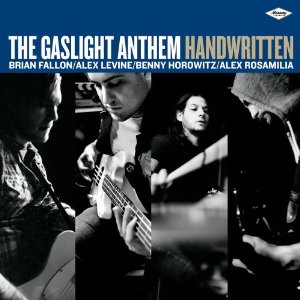
2012 is turning out to be a pretty good year for bands that sound like Bruce Springsteen. For one thing, Bruce himself came out with one of his best albums since the early 80s. Lucero’s got a solid record (to be reviewed at some future date here). And The Gaslight Anthem have a record that continues to legitimate their claim as the kings of the post-Bruce genre.

It’s called Handwritten, and you get the sense that this appeal to authenticity is not just an affective thing with them. In lyrics, style, attitude, and every other way imaginable, these guys want to communicate the importance of doing things the right way.

That means a lot of things. It means a commitment to the true spirit of rock and roll. It means believing that anthems of love and passion really do contain within them the possibility of becoming something more. That redemption is rare but real, and all the more precious because of its rarity. That the coolest kid around is the one who can dare to be earnest.

In this respect, this is the album where the Gaslight Anthem have become almost more Springsteen than the man himself.

By which I mean: this sounds like the album that Bruce Springsteen would write if he were a character in one of his own songs.

As I have written in the past, Bruce has always been a lot more skeptical than his critics have assumed. The Springsteen tropes exist not because they’re meant to reflect a real story of the world. No, they exist because they provide the background narrative of his imagined universe. They tell us what his characters want to believe about themselves. The guy who shows up at Mary’s door with the promise of redemption inhabits the same world as the Vietnam vet who lost his brother at Khe Sanh. And they both stand in as archetypes for the guy who is trying to write his novel and just can’t make it click.

Cars mean freedom, but they also represent wasted years spent on ephemera. The train is the universal metaphor—it takes us into the land beyond, brings us all together, forms the connective tissue of our greater psyche. And these vehicles scream to us of salvation and redemption. But the broader point, made clear only from the distance as the whole narrative blends together, is that redemption was never in the thing. Redemption is the thing, and it comes from our capacity to believe.

Look at Thunder Road. He sings “All the redemption I can offer, girl, is beneath this dirty hood,” and if you want to be ungenerous you would interpret that as a belief that the car is some simplistic metaphor for freedom. That the American Dream is found in some fuel-injected engine. But that’s not the point at all. No, it’s the act of offering that matters. The substance of the offer is what gives it a narrative hook. But if you treat the hook as the thing itself, you are doomed.

Of course, Springsteen drifts into that sort of cliché and self-parody at times. But at his best, there’s this additional level of depth. The characters may believe in the symbolism, but they are portrayed with a sympathy that lets us, the observers, see the larger magic at work.

The kid sits there with hand outstretched, and asks her to share his dream. But the dream is not the magic of the highway. It’s not the perfection of handwritten notes. It’s not the majesty of the river. The dream is the dreaming itself. The finding out, the testing, the endless faith in the possibility that there must be something more. And if we can’t find it here, then we just have to keep looking.

When we come to believe that the thing itself is our redemption, then we come out on the other side of Springsteen’s American Dream. On that side you see the sad lovers of Racing in the Street who can barely stand to look at each other anymore. Or the killer in Nebraska who can only believe in a ‘meanness in this world.’ Or the vet who has ‘nowhere to run, ain’t go nowhere to go.’

These are the anti-heroes, the ones who believed in something and saw it fall through. They are older, bereft of passion, leading lives of toil and pain. They’ve lost their belief. But it’s because the thing they believed in was the song instead of the singing.

And that’s the thing about this Gaslight Anthem album. Like I said, it is earnest from start to finish and wrought with a great deal of care. But as beautiful as it is, I can’t help but feel like it suffers a bit in comparison to the depth you hear in Springsteen. That is, this record is full of things to believe in, but it holds onto those things like talismans. And this can occasionally obscure WHY that belief is so powerful.

Don’t get me wrong; this is a great record. It’s just not quite as good as it needs itself to be. Because there is no narrative structure, these songs are experienced as little slivers of possibility. They are iconic, but lack the depth of possibility that places them in a larger pattern of meaning.

“Handwritten” gives us the songwriter, scratching out a song in the moonlight, transcribing the fullness of his own soul. It’s an ode to the way that music reaches across distance and possibility and connects us together. But you can’t help but wonder who this person is. What specifically drives him? The impulse to say that music is universal is powerful, but it trends too far into its own halo in the implication that the nature of this universality can be captured in the bared heart of the poet.

“Mulholland Drive” dances close to the edge. Phrased as a question, it asks the one who left what happened to all the promises. It threatens to come across like a vicious caricature, with the white knight who offered true love to rescue the girl who then repaid the debt by scorning him. If that’s what the hero is offering in terms of redemption, then I’ll happily pass. It’s the sort of song that has the potential to really reflect the grey areas where everyone is to blame and none are at fault. It just doesn’t quite make it.

The defining feature of the very best songs on the record is their capacity to get past this fascination with the thingness of an experience. For example, “Here Comes My Man” is a delicate portrayal of the ambivalence that comes from past loves. It succeeds because it portrays the experience rather than idea. And “Mae” provides the specificity that’s often missing elsewhere. You don’t just get the sense of longing – it’s conveyed in aching detail. And it’s here that the ode to the possibility of magic on the radio. Fallon sings “We work our fingers down to dust / while we wait for kingdom come / With the radio on” and you know precisely what it feels like.

The highlight of the record, though, has to be “Howl.” This seems to be a deliberate attempt to return to Thunder Road. There’s a girl whose dress waves, a guy with a car offering to take her away. But it’s pitched toward the future, to a Mary who said ‘no’ to the first offer. She stuck around, went to school, and made a life for herself. And now our hero sends out a final missive: you know where you can find me, and all those plans I made might still have some life in them. It works because it’s audacious, it works because it feels REAL, and it works because Fallon absolutely sticks his lines. “Radio, oh radio / do you believe there’s still some magic left somewhere inside our souls?” The pain is tangible, and the hope even more so. On an album that’s full of insistence that the radio really might just save us, this is the shining moment where it feels absolutely and completely possible. So when he sings “I waited on your call and made my plans to share my name” there’s nothing you can do but hope along with him.

“Howl” lasts just two minutes, but in that time it conveys all the possibility of this band. If they could spin that magic out over the course of the whole record, this might be the best record of the decade. As it is, it has to settle for merely being very very good.


Posted in Uncategorized | 1 Comment

Previewing the second debate

[Edit: I’m an idiot and swapped the debates.  The one tomorrow is actually the town hall, which will be about basically anything people ask questions about.  The explicit foreign policy debate isn’t until next week.  Still, my general points stand, so I’ll leave this up]

So the second debate is coming up, and this one is going to be about foreign policy.  I predict more of the same from Romney, only more so. If you were frustrated last time by him asserting generalities and absolutely refusing to back those up with any detail, then you are going to be driven up the wall this time.

If you’re Team Obama, how do you prepare for this? Well, it’s actually pretty simple I think. Romney really doesn’t have any meaningful differences to highlight in terms of policy. Which just means he’s going to complain about RESULTS and try to completely ignore POLICY. That is: he’ll talk about how things are chaotic in Syria, how Iran is pushing for the bomb, how Afghanistan isn’t exactly peachy, how the power gap with China keeps getting smaller, etc. And then he’ll mouth extremely vague platitudes like the value of a ‘strong foreign policy’ and how he has a ‘commitment to American exceptionalism.’

In response, Obama needs to do two things, and do them over and over.

First, he needs to defend his accomplishments. Killed Bin Laden, wound down a terrible and wildly stupid war (and the less said about Afghanistan the better), prevented a genocide in Benghazi, foiled numerous attempted terrorist attacks on the US, Al Qaeda is a few radicals in caves these days. And so on. While I personally am more than a bit leery about some of those phrasings, I think they will work for him. Obama has more credibility on foreign policy than any Democratic candidate of my lifetime and ought to capitalize on it. He said he’d go into Pakistan if necessary, he did, and now Bin Laden is dead.

Romney will want to portray the violence in the Middle East as a problem. But Obama needs to come back over the top. Under my watch, dictators in the Middle East were toppled in the name of democracy. For all that there is trouble there, it’s the trouble that comes from people asserting the freedom and values that we all believe in. The previous administration instigated disastrous wars and provoked chaos. We have helped usher in more meaningful changes by giving the people in these countries the chance to assert their own freedom.

Second, he needs to press Romney repeatedly to clarify what he’d do differently. And he needs to do this by emphasizing the difference between himself and Bush. He needs to clearly and coherently identify these foreign policy issues as allowing for two basic responses: his, or the cowboy insanity of the Bush adminstration. And then put it to Romney: if you don’t like how I’m handling it, that must mean you want to put US soldiers in the middle of the conflict.

The beauty about this debate strategy is that it is almost perfectly resilient to anything Romney can say or do. If you construct your arguments correctly, Romney can weasel and dissemble all he wants – and it will appear as precisely that. Meanwhile Obama comes off as the adult in the room, the guy you can trust in a crisis.

Posted in Uncategorized | Leave a comment

It’s the numbers, it’s the numbers you don’t stand a chance

It’s Not My Fault, I’m Happy– Passion Pit

The new album from Passion Pit seems like a classic case of the sophomore slump. Gossamer mimics many of the patterns of the first record without delivering them at quite the same level of energy. The production values are just a little bit higher, but not in a way that really makes you turn your head. And, most importantly, they don’t have a song that comes close to matching the hooks and the energy of “Moth’s Wings” or “Sleepyhead.” In fact, you can’t help but wonder if the higher levels of musical proficiency aren’t just covering up a bland re-tread of the original product.

After a couple listens, though, you realize that none of that stuff matters. This is a great record in large part because it doesn’t try to be anything more than it is. There is no one song with the huge hook to get all the hipsters bobbing their heads, no chorus that tries too hard to impress. It’s just 45 minutes of music that delivers perfectly on the promise of the album title. If ever there were gossamer music, it’s here.

The best example is “It’s Not My Fault, I’m Happy” which grows on me with every listen. It follows a pretty traditional song structure (verse/chorus/verse/chorus/bridge/chorus) but they just do it so darn well that you couldn’t possibly care. I’m a huge fan of musical transitions, and there is no more basic form of that phenomenon than the shift from verse to chorus and back. And this song is pretty much a textbook example of how to do it right. The verses stamp along at a stately pace, the choruses come in like a ton of bricks and just when the sweetness of the chorus risk overwhelming you they come back with the august longing of the chorus. Rinse and repeat. It’s stupidly simple, but it takes a special kind of genius to stick the landing.

Elsewhere, “Constant Conversations” is the much slowed down version of the same effect, where they get a chance to show off the vocal harmonies. “Cry Like a Ghost” charts a middle course, with a slightly woozy blend of candy and buzzing synths. “Hideaway” is the quintessential case of a song that could strike you as a knockoff of themselves if you wanted to be ungenerous, but if you turn a slightly friendly ear to it will reveal itself as a pure pop gem.

Even the weaker tracks deliver pretty well. “Carried Away” is mostly filler, but it’s delicious filler. “On My Way” is mostly buildup without a lot of action, but the bit that starts about two minutes in is plenty enough payoff. And “Where We Belong” wants to convey a sense of atmospherics that it can’t quite pull off, but still feels like a perfectly reasonable denouement for the record.

It would easy to write this record off, but it would be a mistake.  The falsetto vocals, the sugary sound, these things make them seem just a little lightweight.  But they’re increasingly revealing themselves to be genuinely talented artists with a deep understanding of musical texture and the power of music to redeem the pain of everyday life.

Posted in Uncategorized | Leave a comment

Beneath the national weight and the slow arc of a fist

State Hospital– Frightened Rabbit

It still seems like Frightened Rabbit is trying to find their feet a little bit. After the mind-melting beauty of The Midnight Organ Fight, anything was going to pale a bit in comparison. 2010’s Winter of Mixed Drinks went big, but couldn’t quite deliver the pathos to make it feel significant.

Since then, they’ve released a couple short EPs that play around with form a bit more. They struck gold with “Fuck This Place” last year, but combined it with a couple dreary songs that barely got into second gear. That’s much what happens on their recently released State Hospital EP. Two wonderful songs are patched together with three insubstantial ones.

The title song “State Hospital” is by far the best track here. It’s also the most fully realized vision of what the next great album from this band is going to sound like. It’s got some of the epic feel of the last record – you can imagine this blowing apart a stadium – but it has much more texture. The soft/loud dynamic is finely balanced, so that when they do eventually light the fuse it doesn’t feel contrived. It’s emotionally fraught, but doesn’t pretend to the same kind of shattering intimacy from The Midnight Organ Fight. Which is an important thing for them. It speaks well of their ability to paint a picture of damage and loss, rather than rending open the wounds directly and letting the viscera pour out. This is a more fully realized artistic object, less powerful perhaps, but making up for it with superb craftsmanship.

The other very strong track is “Home From War.” Again, it certainly still sounds like a Frightened Rabbit song, but is notably distinct as well. In fact, it reminds far more of their debut record than the more full-bodied stuff that has come since. All their best songs in recent years have felt like tidal forces, but this one feels a lot more like a train rattling down a track. It’s a nice change.

So that’s the good. These two songs, combined with the previously mentioned “Fuck This Place” highlight everything great about where this band is going. Unfortunately, the other songs on the EP don’t really live up to that promise. “Boxing Night” sounds like a song that’s halfway done. It’s got the component parts but doesn’t appear to have been built into an actual song. It just chugs along without variation until it’s done. “Off” is much further off the beaten path for them, but only because it seems to have given up on the idea of a melody or rhythm. And the less said about “Wedding Gloves” the better. Yikes.

Bottom line: “State Hospital” is the only must-own song here, but if you’re anything close to as big on this band as me, you’ll want to get the whole thing just to see where they’re going.

Posted in Uncategorized | Leave a comment

Don’t even care if the heart grows fonder

Inside/Outside– Tica Douglas

A synth line that unwinds itself slowly. It reverberates gently, and then is punctuated by a pitter-patter of drum beats. It’s got the deep cold feel of space, like a pop dream floating through the starry night. But when the bass comes in, things start to rattle and shake. And before you know it, everything has burst off into the distance. And all that’s left behind are the remnants of fireworks in your eyes.

Tica Douglas is traditionally a singer-songwriter firmly in the acoustic troubadour mold. So it’s particularly exciting to hear something that bursts out of those confines, stretches out her wings, and takes a serious leap into the great unknown.

Pick up this track here, or grab her Apollo EP.  One of her old songs was on my 2011 list, but this new stuff is her best work so far.

If you’re in New York, check her out every Sunday this month at Pete’s Candy Store.  Or on Oct 23rd at Cameo Gallery.

Posted in Uncategorized | 1 Comment

Void for vagueness

Vague Space– Stephen Malkmus

Romney certainly won the debate as a debate. Stylistically, he simply looked and sounded better – pressing his points and speaking clearly forcefully. In terms of content, he won the debate in the sense that he made a number of outrageous statements which Obama failed to deal with. And even when Obama did press his case, he didn’t do so in the context of the debate very well.

That is: he seemed to believe that Romney was obviously stuck defending his policies and ideas of the past 18 months. But the Romney who was on the stage kept claiming that he had nothing to do with those things. Now you and I, avid followers of politics that we are, know how dissembling Romney was being. But the average viewer: probably not.

For my debate friends, I think what we saw last night was Romney as a K debater. He was highly critical of Obama’s plan but categorically refused to state clearly what he would actually like to replace it with. He represented far right principles, but did so in a fashion that claimed to capture all the benefits of mainstream liberalism, while somehow evading all its supposed problems (in a series of 2NC floating PICs). By far, his biggest tactic was: ‘that’s not my Zizek.’ Obama’s accurate descriptions of Romney’s policies didn’t stick very well because Romney just kept asserting that there was no link.

Now, Obama’s best attacks were focused here: pointing out the voodoo math in Romney’s tax plans, the intrinsic vagueness of ALL Romney’s policy proposals, the inanity of Romney’s attack on Obamacare, etc. Even so, it took until the very end for this to develop into a real theme. If Obama had been more forceful at consistently identifying the problem of vagueness, this might have ended up being a bigger story coming out of it. It still might be, of course, and if the Obama campaign knows what they’re doing (which they do), they will press this hard over the coming weeks.

My takeaway from the debate is that Romney will certainly get a bump, and maybe even a big one. The polls that come out over the next week will tighten a lot, and we may even start to see a couple which put Romney in the national lead. But I also think there will be some long-term danger for Romney in all of this. Winning the optics last night was huge for him, and made it worth it, but it did come at the cost of saying quite a few things that will put him in hot water.

For example, the far right can’t have been excited about Romney basically conceding ‘yeah, I won’t actually push for tax cuts unless they can be offset’ (which they obviously can’t be). Romney’s attempt to say ‘no link’ to the fact that repealing Obamacare will crush people with preexisting conditions was a blatant and flagrant lie. And if Team Obama go after this, they can convincingly argue that the whole Romney health care house of cards necessarily collapses when subjected to the slightest bit of scrutiny.

The basic Obama theme needs to be: “promises are easy and Governor Romney is wonderful at telling people what they want to hear. But governing is hard, and when the rubber meets the road this stuff all has to add up. People need to EARN your trust that they will have your interests at stake once they take on the job. Otherwise, all the sacrifices will consistently hit you. You have to choose in this election whether you want to support the candidate who cares about YOU or the candidate who only cares about your VOTE.”

Posted in Uncategorized | 4 Comments

Devious plan or mere stupidity: you make the call

Shorter Massimo Calabresi: LOL, liberals think that voter fraud isn’t a real problem, but look at Florida where a Republican organization was engaged in massive voter fraud.  Now let’s pass voter suppression laws!

Posted in Uncategorized | Leave a comment

You realise you can’t make it anyway

Don’t Marry Her– The Beautiful South

A new poll suggests that partisan antagonism has severely calcified in recent years.  The crucial finding:

A pair of surveys asked Americans a more concrete question: in 1960, whether they would be “displeased” if their child married someone outside their political party, and, in 2010, would be “upset” if their child married someone of the other party. In 1960, about 5 percent of Americans expressed a negative reaction to party intermarriage; in 2010, about 40 percent did (Republicans about 50 percent, Democrats about 30 percent).

Kevin Drum finds this to be pretty disturbing.  I don’t really share his surprise, though. Some factors to consider.

1) While people seem to have grown more intolerant on this front, they have grown far more tolerant on many others.  Ask the same question about race or sexuality, for example, and see what you find.

2) The meaning of party identification has changed a lot over the last 50 years.  There are far, far fewer liberal Republicans and conservative Democrats are fading away.  It’s a lot harder for people to imagine someone who fits all your other expectations for a good match (shares your values, etc.) who just happens to be of the other party.

3) The fading of locality.  This connects with point #2.  Lots of people in the 50s lived in parts of the country where the local brand of Republican or Democrat was shaped more by geography than grand party ideology.

4) Building off the previous two points, people are far more likely to see the extreme pictures of the opposing party now than they once were.  If you’re a liberal Democrat, you just have to turn on Fox News to see what the other guys think.  And the crazy things said by a small minority come to stand for the whole party.  This is compounded by the ease of insular group associations provided by the internet.  If you’re at all inclined politically and have a settled party position, you will probably seek out like-minded people who will share your complaints about the other side.

Points 1-3 attempt to explain why this looks like more of a shift than it really is.  Point 4 argues that to the extent that there is a shift, it’s not too difficult to explain.

But I also want to suggest that #4 is not merely a matter of irrational dislike, of epistemic closure, or what have you.  To some extent, the changes in information culture have just made it easier for people to realize/express their preferences.

Which is to say: political identity matters!  It matters a lot to some people.  Why shouldn’t you prefer that your son/daughter marries someone who shares a worldview, a set of values, and a general attitude toward the world?  Party identification includes those things, especially these days.

That is not to say that all Republicans or all Democrats are the same.  Of course they’re not. There are plenty of Republicans I get along with great and would welcome into my family any time.  Just like there are tons of Democrats who are total scumbags.

But absent ANY other information, would I prefer my hypothetical child marry someone who supports my team?  Well, yes.  Would I be ‘upset’ about it?  Not precisely, but maybe a little.  Just like I would be ‘upset’ if my kid wanted to marry a Yankees fan, or someone whose favorite band is Nickelback.  And those things matter a heck of lot less than politics!

Posted in Uncategorized | Leave a comment

The utility of voting

Paul Campos asks if there is any utilitarian case for voting. The context is a discussion in blog-land about whether single-issue voters (or ‘pox on both house’ voters) are being irresponsible for refusing engage in cost-benefit analysis about which candidate is better overall.

So: I think the easiest answer to Campos’ question is simply to deny that you NEED a utiliarian basis for voting. Casting a ballot, I think, is a matter of civic responsibility. Your goal shouldn’t simply be personal interest-maximization. However, I don’t expect the whole world to join me in that judgment, so here’s two quick reasons why utilitarianism shouldn’t lead you to consider voting completely meaningless.

First, the consequences are large enough that even a miniscule risk of tipping an election is probably still worth the very minimal effort it takes to vote. This is particularly true for people voting in elections expected to be somewhat close. My vote for Obama in November has (for all reasonable purposes) a 0% chance of making a difference. So it’s hard to make it count by this standard. But anyone living in Ohio, Florida, North Carolina, Wisconsin, etc. has a non-zero chance of actually mattering. And if you think the difference in value provided by one presidential candidate over the other is even a modest gain, then spread that value out over hundreds of millions (even billions since we’re the global hegemon) of people. It adds up quickly. Let’s say you have a one in a million chance of tipping an election. Well, if your preferred candidate will provide one additional dollar of utility per citizen, then the payoff for your tipping-vote is 300 million bucks. Sounds like a good investment to me.

Of course, there are two problems with that argument. One I already mentioned: it only applies to those people who realistically can cast a vote with even a one-in-a-billion chance of making a difference. Which is a surprisingly small number of people. And second, it assumes that you want to measure utility at the social level. But if you’re purely self-interested, you might ignore those benefits. So the math gets a lot tougher.

So my second utilitarian argument for voting focuses on rule-utilitarianism. Basically: the rule of voting produces significant good compared to the rule of ‘some people vote and others free-ride.’ Even if this isn’t formalized with an actual law, the normative principle works, that one should vote because it conforms to the rule that best maximizes social utility.

Posted in Uncategorized | Leave a comment