Hmmmm

Scott Lemieux points out a very silly column about the death penalty. He points out the lunacy of acting like the morality of the death penalty should be judged based on extreme cases. That is, of course, a good point. I would still oppose the death penalty even if it was restricted to the 100% guilty and the 100% horrible. But it would certainly change the moral argument, compared to the status quo which uses the death penalty in disproportionate terms against people based on race, class, etc.

But for me, the absolute absurdity of the article is based on something even more simple.

Yet, on one point, Breivik is not talking crazy. At his trial, which began April 16, he pronounced the maximum penalty for his actions — 21 years in prison, or longer if the government meets certain conditions — “pathetic.” He “would have respected” the death penalty, Breivik said. Of course, he won’t get it; Norway abolished capital punishment long ago.

Yes, we should definitely take a mass murderer’s sense of masculinity and righteous violence as our standard for justice. I can see no problem with that.

Posted in Uncategorized | 3 Comments

When is a tax not a tax?

Today I was reading Scalia’s dissent in Clinton v. City of New York (the case that ruled the line-item veto unconstitutional) and was struck by one of his argument, and its applicability to the ACA case:

The short of the matter is this: Had the Line Item Veto Act authorized the President to “decline to spend” any item of spending contained in the Balanced Budget Act of 1997, there is not the slightest doubt that authorization would have been constitutional. What the Line Item Veto Act does instead-authorizing the President to “cancel” an item of spending-is technically different. But the technical difference does not relate to the technicalities of the Presentment Clause, which have been fully complied with; and the doctrine of unconstitutional delegation, which is at issue here, is preeminently not a doctrine of technicalities. The title of the Line Item Veto Act, which was perhaps designed to simplify for public comprehension, or perhaps merely to comply with the terms of a campaign pledge, has succeeded in faking out the Supreme Court.

While I continue to believe that a reasonable reading of the recent (well, last 70 years) precedent on the Commerce Clause makes it clear that the mandate is a reasonable use of Congressional power in that respect, the taxation issue is another potential angle.

There really isn’t much of a meaningful difference between the mandate and a tax.  You can read it as a penalty for non-compliance.  Or you can read it as a tax, for which most people will get a tax-break (if they have insurance).  You can debate about whether this completely collapses the distinction between tax and penalty, though there is a piece here which explains a difference that makes some sense.  I haven’t really thought through whether this actually makes sense, but it seems pretty plausible.

However, the more common objection I’ve heard is simply that it wasn’t structured as a tax.  They avoided calling it a tax assiduously.  And they claim it isn’t a tax so that they can hear the case at all (since the Anti-Injunction Act) would mean the Court couldn’t even hear the case until it actually went into effect if it were a tax.  But Scalia’s reasoning here seems to eviscerate those arguments.

I assume the Court doesn’t WANT to consider it a tax, so won’t be troubled by this.  But I’m really having a hard time understanding how it’s meaningfully different.

Posted in Uncategorized | 1 Comment

God is a place you will wait for the rest of your life

Engine – Neutral Milk Hotel

It’s going to be hard to discuss my experience seeing Jeff Mangum last night without treading a bit into the Messianic.  To start with, In the Aeroplane Over the Sea is basically a sacred text. It’s almost impossible to believe it could have come from human hands. It is sui generis, sounding like nothing else that has ever (or probably will ever) be made. Mangum wrote the record as a kind of ode to Anne Frank, reaching out over the decades, trying to convey the grandeur of life itself, and its catastrophic loss. It defies any simple explanation, but for me I think it can almost be summed up in this way: for the sake of humanity as a whole, to Anne Frank: we should have done more.  And for all that we never did and never will do, we are so very sorry.

And then there is the personal history. Just as the band was gaining an audience back in 1998, Mangum simply disappeared, retreating into himself. As time went on, a few years turned into a decade and more, and it increasingly seemed like he was simply gone for good.

It was achingly sad for all of us who only came to know him after he had already left. I first heard the record in 2000, and spent a decade coming to love it more and more. And it increasingly made sense why he had abandoned the field. The pain of the record is overwhelming; it conveys a kind of special madness, that comes from an overabundance of pathos. The surprising thing, I came to think, was not that he succumbed to depression so soon after his greatest triumph. The surprising thing is that he held it together long enough to make the record at all.

Now, I can’t really know any of this. He certainly was depressed (as the few interviews he’s given over the years have made clear), but it may be entirely my own device to imagine that this can been discovered in the music itself. Maybe a happy and satisfied Jeff Mangum would have made precisely the same record, and gone on to make many more. I would love for that to be the case.

But I think, for a lot of the most dedicated fans, there is a clear analogy. What Anne Frank was to Mangum, he became for us. Someone who suffered intensely, but in spite of this brought a thing of pure beauty and hope into the world. It broke our hearts. And we wanted, more than anything else, to be able to communicate to him just what he has meant to us.

At the same time, we worry that this is over the top.  Does he want our adoration?  Is that part of what made him give up on music in the first place? And there was an undercurrent of that fear at the show. A slight tension in the audience that showing the depth of our emotion would violate the conditions of his return. A shyness. But just a few minutes into the opener “Two Headed Boy Pt. II,” that tension had faded and was replaced by shivers. And when he sang “God is a place we will wait for the rest of our lives” I was pretty much a puddle on the floor.

As he continued, my sense of wonder just grew and grew. Hearing these songs ringing around me, surrounded by a thousand people feeling the same sense of magic. It was an incredibly powerful experience. As he finished songs, we erupted into applause. In moments of quiet, people would yell out “thank you Jeff” and it felt like the most profound thing I had ever heard.

He played nine of the 11 songs from In the Aeroplane Over the Sea, missing out only on “Communist Daughter” (no big loss) and “[Untitled]” (which I would have loved to hear, but is clearly the song least suited to the stripped-down approach of the show). “Holland 1945” is my favorite of his songs, and while it was great, it only matched my expectations. Some songs that I like a bit less actually ended up being the ones to truly blow me away. “Ghost” has always struck me as a good but not otherworldly song, but the performance here has changed my mind. I’ve always respected “Oh Comely” but never quite loved it, until hearing it last night. And, of all things, “The Fool” was out-of-this-world good. On a night that was mostly just Jeff and his guitar, having the horns and drum out on stage were like a jolt of pure energy. Another clear highlight was his cover of “True Love Will Find You In The End,” which was achingly beautiful.

So he finished the set and the energy in the room was palpable. We all knew that “In the Aeroplane Over the Sea” was still to come in the encore.  And it was everything we hoped for.  And seemingly a perfect conclusion, to end on “can’t believe how strange it is to be anything at all.”  And that’s where a lot of shows on his tour have in fact ended. But we were not deterred by the lights coming back on. We stayed and clapped and cheered and stamped and begged for him to come back.

When he finally came back out for a second encore and they dimmed the lights again it felt strikingly real. He grinned, shrugged, and asked quietly “I guess I could play Engine?” And then he did. And it was wonderful.

So yeah, thank you Jeff. Thank you for making this music, and thank you for finding a way back out here to play it for us one more time.

Posted in Uncategorized | 2 Comments

On constitutional interpretation

Kevin Drum has an argument that I agree with in part, but strongly disagree with in another part.  He argues that if there needs to be a limiting test on Congressional power, this is obviously something that the Court can establish.  I still want to push back on the idea that this is all that important here, given that I think existing precedent is more than sufficient to establish that the ACA fits within Congressional power and the simple solution is just to say ‘it’s Constitutional given existing precedent.  TTYL.’  But if the luminaries on the Court are so worried about this, and A) are really going to strike down the mandate based on a slippery slope fear and B) are genuinely open to persuasion, then it’s not that hard a problem to solve.  They can just come up with the principle themselves.  So that much I agree with.  Where I disagree is here:

[I]t’s still not the government’s job to articulate a limiting principle. It’s the court’s job. That’s what they do. They write opinions that — in theory, anyway — provide guidance to lower courts about how to apply the law. Supreme court opinions are chockablock with three-prong tests, significant nexus tests, balancing tests, and a million other kinds of tests. As long as Kennedy or Roberts or Breyer or Kagan or any of the others can come up with something that gets five votes, then we have our limiting principle. There’s no reason it has to come from the Obama administration. In fact, all things considered, it’s probably best if it doesn’t. The justices will all feel a whole lot smarter and a whole lot more decisive if they do it themselves.

I think it’s a very bad idea to defer all constitutional interpretation to the courts.  The activity of the entire government is, in a deep sense, about constitutional interpretation, whether they admit to it or not.  Why pass these laws?  Why enforce them in this manner?  I have no desire for legislatures and executives who simply do anything they can with no considered judgment about where it fits into the larger constitutional map of basic principles and values.  That is a recipe for a stale and non-responsive Constitution.  Congress very much should think about the Constitutional basis for the laws that they pass, not just in terms of limits on their power but also in terms of their obligations.

The Constitution is not a Medieval sacred text, that can only be interpreted by a priestly caste in robes.  It is the basic structure of our whole political system, something that is at stake in all kinds of political argument.  When we defer to the Court as the only agent capable of using the Constitution to introduce change into the world, we abandon a core element of political participation.

I’m not someone to valorize democracy for the sake of democracy.  But I very much think that constitutional interpretation is improved substantially when it is a genuine conversation among many actors in society, rather than the sole province of the Court.  They do play an important procedural role, but in terms of the substance of interpretation, the more the merrier.

Anyways, if I had more time I would post about this in more detail since this is increasingly integral to my dissertation and therefore something that I ponder quite a lot.  But I’ve got tons of things on the agenda, so it’ll have to wait.

Posted in Uncategorized | 1 Comment

Health care in the Court

Consensus seems to be that the oral arguments on the constitutionality of the health care law did not go well today.  Couple things:

1. Beware groupthink.  I only skimmed some of the transcript and comments.  But it didn’t sound THAT bad.

2. Oral arguments just don’t matter that much.  It’s a small window into the thought process of these people.  But even there, it’s pretty guarded. Particularly for someone like Kennedy – whichever way he comes down on it, he’s going to be very sensitive to how it will look.  So making sure he’s picking at the weak parts of the argument is going to be important to him, so he knows what he has to justify.

3. Some of the worst things today had to do with the apparent lack of understanding (or belief) that the mandate is necessary for the broader function of the law.  There’s a decent chance that this argument will get pushed more forcefully tomorrow when they discuss separability.

4. That said, it is kind of a bummer.

Posted in Uncategorized | 3 Comments

Adventures in analogies: Tom Petty and Bruce Springsteen

Loose Ends – Bruce Springsteen (from Tracks)
Keeping Me Alive – Tom Petty (from Playback – the Petty box set)

(Tracks chosen to represent Petty doing his best Springsteen and Springsteen doing his best Petty. And to give you something not from the regular albums)

Yes, this is another post about Springsteen that’s not actually a review of the new record. And it may only be interesting to me.  But it’s my blog so you don’t have to read it if you don’t want. So here goes.

It occurred to me this morning that the career paths of Bruce Springsteen and Tom Petty are remarkably similar. The thing that brought this to mind is the analogy between Born to Run and Damn the Torpedoes. In each case, it’s the third record – and it’s the first one to really grab the popular imagination. It’s where the voice of the artist becomes really clear. And then I thought: hmmm, they both also have mid/late 80s records that were huge but are often critically panned for being overproduced (Full Moon Fever and Born in the USA).

So I started to think about their whole discographies, and the similarities are really striking. Bruce is a couple of years ahead the whole way, but if you stack up his first, second, third, etc. against Petty’s, they track VERY well. Generally speaking, the Springsteen records are better. But they’re usually in the same ballpark. Observe:

Tom Petty and the Heartbreakers
Greetings From Asbury Park

Debut albums, show a ton of promise, clearly fairly derivative of major influences. Beloved by some fans, but generally not considered peak work.

You’re Gonna Get It
The Wild, The Innocent…

Generally similar to the debut record, but developing the premises a little bit. A few major, long-lasting hits. Bruce’s record is probably more highly thought of by fans – but it’s still reasonably close.

Damn the Torpedoes
Born to Run

The breakthrough record. Clearly shows a lot of signs that it’s the same artist, but has taken a significant leap. Songs about people living difficult lives and wanting to believe in something more. Even the Losers as an analog to Thunder Road or Backstreets. Louisiana Rain as an analog to Jungleland. Refugee is one of his biggest hits, so it’s at least somewhat analogous to Born to Run.

Hard Promises
Darkness at the Edge of Town

A much darker version of the breakthrough record. Both of them were famously unhappy when working on this one because of huge fights with the record company. The Waiting is an analog for Badlands. Springsteen is definitely more down in the muck, though. There’s nothing that really compares to Racing in the Streets or Darkness on the Edge of Town.

Long After Dark
The River

The analogy isn’t tremendously strong here. But in some sense these are both records about being in a holding pattern. There is an effort to try and get back to the roots of the music after the last two bigger ones. The River, though, is big and sprawling where the Petty record is not.

Southern Accents
Nebraska

Their roots record. For Petty, this was about his own personal heritage. While for Springsteen it’s all about characters. But the general feeling and tone of the records is similar. Stripped down. About the very small parts of life. This the first record where Petty has a reasonable case for being better, though of course the Nebraska-lovers will disagree.

Let Me Up (I’ve Had Enough)
Human Touch/Lucky Town

This is the first out-of-order comparison. Petty had his crappy ‘wait, I’m a rock and roll guy who is still relevant and stuff’ record come prior to his uber-popular one, rather than after. But still, they’re pretty similar(ly bad).

Full Moon Fever
Born in the USA

And here is the big one. Made people angry for being overproduced and selling out, etc. Has a ton of really good songs in spite of that.

Into the Great Wide Open
Tunnel of Love

This is another relatively weak analogy. ItGWO is basically just Full Moon Fever redux, while Tunnel of Love is clearly on the other side of a significant dividing line from Born in the USA. This is another one where Petty is probably better.

Wildflowers
The Ghost of Tom Joad

Acoustic music! Wooo! The analogy isn’t fantastic here, though, because a) there’s a fair number of rockers on Petty’s record, too and b) Wildflowers is his best album, while Tom Joad is…not Bruce’s best record.

Echo
The Rising

Big records from big stars right around the turn of the millennium, reflecting their sense that they are now the elder statesmen rather than being in the mix of it. They’re both quite good.

The Last DJ
Working on a Dream/Magic

The real analogy is between The Last DJ and Working on a Dream.  They are both records that demonstrate they have forgotten about being elder statesmen, and kind of fail because of it.  But Working on a Dream is kind of just the far-inferior version of Magic, so they kind of fit together.  And the title track for the Petty record is very similar in quality and content to Radio Nowhere from Magic.

Highway Companion
Devils and Dust
(slightly out of order)

Acoustic-fun, part II. But not as acoustic. Mediocre (but not bad) records.

There’s only a couple records – all from pretty recent – that don’t really fit. Petty had a record that was a soundtrack to a bad Jennifer Aniston move in the late 90s with some good songs but which kind of dragged. And a boring record a couple years ago. And Bruce did has Wrecking Ball and the Seeger Sessions (which maybe doesn’t even count).

Anyways, I thought it was interesting.

Posted in Uncategorized | 6 Comments

Bruce Springsteen and the power of earnestness

Youngstown (live) – from the wonderful Live in New York City

I’ve got a an actual review of the new Springsteen record coming up (short version: it’s quite good!), but I wanted to make a separate comment today about the critical response to Springsteen. I was reading the Pitchfork review and, surprise surprise, it’s grounded primarily in an unfavorable comparison to Nebraska.  How tiresome.

Look, Nebraska is a good album. It absolutely is. And it is perfectly reasonable for someone to consider it the best of his albums. But the industry of people for whom it serves as the terminal benchmark for all things Springsteen is just incredibly tiresome. People laud Nebraska because it’s gritty and quiet and stark, and so it doesn’t make them uncomfortable like the earnestness (naïveté) they perceive in the rest of his work. No one is going to make fun of you for liking Nebraska.

But that is a lazy and, frankly, reflects a failure of aesthetic imagination. There is a tremendous amount of complexity in his work over the decades. It’s just silly to pretend it’s not there because he writes big rock songs, or because he’s not afraid to utilize powerful symbols of patriotism, family, belief, and movement. Yes, there are plenty of Springsteen clichés. He obviously likes metaphors about trains and cars: they symbolize the idea of freedom, of escape. But it’s not just that: they also symbolize the failures of those ideas. You’ve got the only possibility of redemption in the engine of a car in “Thunder Road” – but you’ve also got people wasting their lives in cars in “Racing in the Streets.”

He loves to valorize hard-work, physical labor. A kind of blue-collar ideal. And of course this sometimes descends into silliness. But it’s wonderful that he continues to care. And if you consider the whole scope of his work, the archetype is by no means uncritically affirmed. He emphasizes the power of nostalgia, but it’s not simply about wanting things to be the way they used to be. He doesn’t want to return to the Depression – he wants to remind us of how protest music can capture an ideal. He doesn’t think we can just go back to Youngstown the way it used to be. But he wants to remind us of what we have given up in this brave new world.

Basically: Springsteen is a troubadour in the old sense. He helps us to build our cultural narratives. In individual moments it can trend toward the absurd. But it’s sloppy thinking to simply condemn his more earnest moments as somehow inferior to the darker elements. There is tremendous power in our dreams, and I’m glad that someone like him still cares enough about that power to try and make something of them.  In a way, it’s far more risky.

It’s no surprise that Springsteen gave us the best musical response to 9-11. It would be easy to make an angry record about 9-11 (and the way it was used to develop a War on Terror). It would be easy to make a mournful record. And it seems like it would be easy to make a hopeful record about 9-11, about the possibility of redemption. But that last thing is not actually easy at all. You have to be willing to put your heart on your sleeve and genuinely feel. And that’s very scary. But that’s the defining feature of Springsteen. He is never afraid to give it a shot.

Sometimes he misses, and the results can be embarrassing. But he’s a great artist because he still finds reasons to believe, because he seems to really think that music can make a difference, because he continues to give everything he’s got in his concerts. You can laud Nebraska all you want, but lamenting that he didn’t keep remaking it just reflects precisely the kind of fear that Springsteen is willing to shrug off. And I love him for it.

Posted in Uncategorized | 1 Comment

I’ll be your Emmylou

Emmylou – First-Aid Kit
King of the World – First-Aid Kit

A pretty large chunk of my 2012 musical consumption has come from the far north Atlantic. The best song I’ve heard so far this year was from Iceland, and this week I’ll be covering a few more Scandinavian artists. First on the list is the two sisters that make up First-Aid Kit.

They got a bit of fame a couple years ago with their cover of “Tiger Mountain Peasant Song” by Fleet Foxes going viral on Youtube. I don’t even actually like that song very much, but there’s something unbelievably enchanting about their video. They’re just these two Swedish kids sitting on a log in the forest, but the sound is far beyond their apparent years. It’s strangely haunting.

Their new record The Lion’s Roar demonstrates a continued commitment to the sound of Americana. That’s best seen on the absolutely lovely “Emmylou” which is an ode to some of the country partnerships of old “I’ll be your Emmylou and I’ll be your June, if you’ll be my Graham and my Johnny, too.” It’s an ode to love, companionship, partnership, and a long history of music. The vocals remind me a lot of The Innocence Mission – with that haunting, shimmery catch in their voices.

Elsewhere, the opening track “The Lion’s Roar” has some absolutely perfect vocal harmonies and the closer “King of the World” is a great stomping conclusion, with Ring of Fire horns and a Conor Oberst interlude. And yes, it all works together perfectly. “This Old Routine” has a wonderful slide guitar bridge, and that wonderful feel of an end-of-the-night ballad. And “I Found a Way” reminds me of the dark tracks you’d find buried on an old Neko Case album.

There are a few tracks in the middle of the record that don’t quite stick the landing. But it’s hard to complain too much about such a self-possessed and flat-out beautiful record.

Posted in Uncategorized | Leave a comment

Retrograde motion – on Derrick Bell and Sandra Fluke

I’m hesitant to even waste my time mentioning this, but I do have a slightly larger point to make. So here it goes.

The new big ‘scandal’ is that Barack Obama while a law student at Harvard said some nice things about Derrick Bell. That’s the whole scandal. Derrick Bell, you may be aware, was an incredibly brilliant legal thinker. He is most famous for being a leading light in Critical Race Theory, which makes the oh-so-controversial claim that legal institutions are not neutral even when explicit forms of discrimination are wiped away. For example, you may be surprised to learn that racism did not disappear the second the Civil Rights Act was signed.

Of course, CRT is a far more complex set of arguments, and there is no clearly defined limits to the field. So it’s possible that some of the more radical claims made by its proponents might go a bit further than everyone will agree with. But you can say that about literally anything. And on the whole, CRT has been a tremendously positive force in our efforts to make law live up to its principles. Which is to say: America is a far better place today because of Derrick Bell. And the fact that Obama spoke highly of him (as he was protesting discrimination in legal hiring practices BTW) is about as controversial as it would be for him to speak highly of James Watson and Francis Crick.

So what’s the larger point? Well, this is an example where people who care about the issues at stake need to aggressively push back. Saying that Obama wasn’t really all that close with Bell is not just beside the point but it (subtly of course) implies that it would in fact be a problem if they were. We should be taking this opportunity to talk about how great Derrick Bell was, and pointing out all the evidence that he was, you know, right in his diagnosis of our society.

Same thing goes for this contraceptives insanity.  Normally it’s not news that Rush Limbaugh says something stupid and aggressively outrageous.  But in this case, it has called attention to just how much the conservative element of the Republican Party (which increasingly exercises total control over the whole party) just flat-out hates women who dare to find pleasure in sex.

Which is to say: people shouldn’t be satisfied with making just ONE of the incredibly obvious responses to this phenomenon.  We should be actively making all of them.  Because at each level, the conservative treatment of Ms. Fluke betrays deep problems in their social picture.  So don’t just point out that many women use birth control for reasons that have nothing to do with sex (though of course that is true and important).  Don’t just point out that people have to pay taxes for things they don’t personally support all the time (though of course that is true and important).  Don’t just point out that the issue here is not taxes at all, but rather what the health insurance that individuals will pay for will cover (though of course that is true and important).  Say all of this and more.  See Scott Lemieux for a great example.

The point here is that these folks are doubling down on their complete craziness. If this thing had blown over quickly, fine.  There’s no point in attacking the extremes if the middle is going to dissociate themselves from it.  But when that doesn’t happen, there are very important contrasts to be drawn.  And it’s plenty worthwhile to do it.

Which is to say: give people all the facts, but not simply as a matter of fact-checking.  Give them the facts in order to drive home the larger point: these folks would absolutely love to punish all women who believe that their bodies belong to themselves, rather than being owned by the men in their lives.  These folks would absolutely love to roll back all the (admittedly piecemeal) racial gains that our society has seen.  Incidents like these are not just ephemeral – they are opportunities to clarify who we really are, and what we want out of our society.

Posted in Uncategorized | 1 Comment

Sunshine in Chicago makes me think about my dad

Sunshine in Chicago – Sun Kil Moon

This has got to be the best song out of Mark Kozelek in a decade.  He’s always most enjoyable doing pretty, world-weary songs but often has a tendency to let them run away from him.  No chance of that here.  It’s two and a half minutes and doesn’t even feel that long.  It’s just him and the acoustic guitar and those gently tinkling bells that make me think of Buddy Holly.  And he’s got the sort of voice that has improved leaps and bounds as it gets a little older and more crackly.  There’s something incredibly intimate and real about it.  Which is not to say that’s overbearing or especially weighty.  The tongue is obviously in cheek on lines like this:

Sunshine in Chicago makes me feel pretty sad
My band played here a lot in the ’90s when we had
Lots of female fans, and fuck, they all were cute
Now I just sign posters for guys in tennis shoes

Still, it’s not a mocking sort of irony, just a bit of a wry grin.

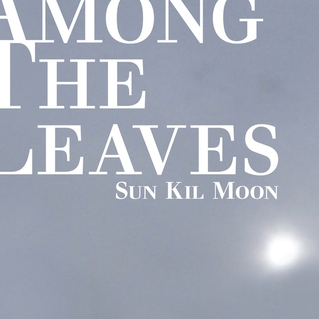
Among the Leaves is due out on May 29.

Posted in Uncategorized | Leave a comment