
Euro 2012

It’s become a bit of a tradition to turn this blog into soccer-central when the major international tournaments roll around. And while I’m a bit more busy this year, I’ll be attempting to post semi-regularly about Euro 2012. And my friend Jan (who is German, but we’ll forgive him for that) will hopefully be posting a bit here as well.

First things first: rooting interests. Unlike the last few big events, I don’t have any strong commitments here. My mom’s side of my family is Turkish, so they’re my second team and I was extremely excited four years ago when they pulled off some miracle-results. But they didn’t qualify this time.  Unfortunately, Greece DID make it, so I’ll be rooting against them as a bit of a proxy for my Turkish nationalism.

I’m a bit of an Anglo-phile, and I really like Roy Hodgson, so I suppose I’m pulling for England. On the other hand, I loath John Terry (as sort of a stand-in for all the irritating things about English football) and after Chelsea somehow stumbled into the European Cup this year, I really couldn’t stand to see more good things happen to him and his ilk. I’ll root for them to make the quarterfinals and lose to Spain.

Speaking of which, I love watching Spain and was pretty firmly behind them in 2010. And it would be cool to see a team finally win three major tournaments in a row. But the ‘wow’ factor is fading with them. If they put together some amazing performances, I will be happy. But if they get kicked around and stifled, I won’t cry too much either.

I really like Ireland. One of my favorite players in the world is Kevin Doyle (from his Reading days), and I think they’re a fun, scrappy team. I really can’t see them advancing out of their tough group, but I will certainly be rooting for it. Same goes for Denmark, who is really good but probably not good enough to get past two out of Portugal, Germany, and the Netherlands.

It sort of pains me to say it, but I really like this German team. They were a real joy to watch two years ago and are just stacked with great attacking talent. They’re my pick to win the whole thing, and I can’t say that would be a bad result aesthetically.

That out of the way, here are my predictions.

Group A
1. Russia
2. Poland
3. Czech Republic
4. Greece

Group B
1. Germany
2. Netherlands
3. Portugal
4. Denmark

Group C
1. Spain
2. Italy
3. Croatia
4. Ireland

Group D
1. France
2. England
3. Ukraine
4. Sweden

Pretty boring, really. I expect those are the most common picks to advance from each of the groups.

If you are looking for upsets, the teams who I’m not confident enough to actually pick, but who have a good chance include: Portugal (if C. Ronaldo can actually play like C. Ronaldo), Ireland (if they can hold off the tide), and Ukraine (who I think is clearly worse than England on paper, but will be playing at home…and they have the advantage of not being England). As I said, I really think Denmark is a solid team, but that’s an unbelievably tough group. Finally, Group A seems quite weak across the board, so I could see that one finishing in any order.

I expect whoever qualifies out of Group B to both win their quarterfinal matches, and think the Spain and France will win on the other side. Germany beats the Dutch in one semifinal while France pulls off a bit of an upset against Spain in the other. And Germany wins convincingly in the final.

Golden boot: Robin Van Persie.
Player of the tournament: Mesut Ozil
Posted in Uncategorized | Tagged | Leave a comment

Constitutional interpretation

You Decide – S

Kevin Drum points out an interesting conflict in conservative values. They desperately want the Keystone pipeline, but making it happen requires using eminent domain for private interests. Which was the issue at stake in the Kelo case, which probably provoked as much conservative outrage as any Court case of the last couple decades. Drum asks:

So here’s the question: is it hypocritical for them to support the pipeline anyway? Or is their sole obligation to argue their position in front of the Supreme Court and then, if they lose, work within the court’s rules to their best advantage? Generally speaking, I’d say the latter. Just because the government passes a law you don’t approve of doesn’t mean you can’t — or shouldn’t — exploit the law to your full advantage. Once it’s passed (or handed down), the law is the law for all of us, even those of us who don’t like it.

This is a tough matter. I get where Drum is coming from, but I sort of disagree. This is because I don’t see the Constitution as a matter for (solely) judicial interpretation. I think political actors (which doesn’t just include legislatures or executives, but includes all of us as the citizens of a constitutional order) have a serious stake in the process of public reason and justification.

The Court plays a very important role, as the actor who settles (at least tentatively) major constitutional questions within the larger political structure. But the word of the Court should absolutely not be assumed to be definitive. To abandon our own capacity for constitutional judgment, by simply deferring to the Court, is anathema to meaningful constitutional law. Obviously, most people agree with this at some level—anyone who says the Court got any case wrong is asserting a personal interpretive capacity and denies the premise that the law simply IS whatever the Court says. I think if we take this responsibility seriously, it means continuing to affirm principles in some cases, even if the Court says otherwise.

I don’t, however, think that this means you are obligated to completely give up on the benefits of a Court judgment with which you disagree. Drum cites one legitimate reason, a strategic one. The metaphor of unilateral disarmament (cited often by liberal commentators on the issue of Citizens United and Obama’s willingness to use the funding sources unlocked by that decision) has something going for it.

There is also a second argument: while we shouldn’t simply defer to the Court automatically, that the Court DOES play its very important role in terms of structuring what is politically permissible at any given time. If we accept the premise that the Court produces genuine political value as the arbiter of these matters, we do owe something to its decision. It is the legitimately designated decider of a certain set of matters. Because the law is intersubjective, it doesn’t really possess any meaning outside of its collective affirmation. We can’t simply rely on our personal interpretations, because those interpretations only work assuming a background condition of collectively validated law.

Short version: people should affirm the law in the manner that reflects the values intrinsic to that law. One of those values is determined by your personal judgment of what the law really demands. Another value, however, is determined by the need for a social process of agreement. When those values balance against each other, there is no clear answer. And it’s a mistake to develop categorical responses: neither pure deference to the court setting ‘the law of the land’ nor intransigent commitment to one’s own view of the law in the face of judicial disagreement.

Posted in Uncategorized | 1 Comment

Federalism and same sex marriage – part III

Part III – Same sex marriage: federalism as a wise strategy?
(Part I of this series is here, Part II is here)

When the question of federalism comes up, my progressive friends have consistently cited gay marriage as an example of the value in federalism. It seems like a good case for a number of reasons. If same-sex marriage were simply up to a national vote, it wouldn’t pass – so state-by-state certainly means more people having access to it than otherwise. Even more, one of the big hurdles for spreading same sex marriage seems to be the fear of the unknown. Now that we have some states were folks can get married and no evidence of negative consequences, it’s a lot harder to prey on that fear. Basically: once it’s normalized in a few places it ceases to seem so odd, and there frankly is nothing else blocking it.

I don’t disagree with that argument, but I do want to push back on it a bit.

While I am emphatically in favor of at least some people getting the opportunity, I do wonder whether the snowballing argument really is true. Is the general shift in favor of same sex marriage really driven by the fact that it’s happening in some places? Or is that simple correlation, not causation? I think it’s much more the latter. There is a broad trend in society of acculturation, acceptance, tolerance, etc. Would that not be true in a world where the national government was empowered to restrict same sex marriage? I very highly doubt it. In fact, if the national government had sole discretion on the matter, I think there is a case to be made that the national elite consensus would grow just as strong, if not stronger. I’m not one who is enthusiastic about ‘heighten the contradictions’ arguments, but I do think there is something to it.

Again, I’m not saying that things would be better on the specific matter of same-sex marriage in world of simple national control. It certainly wouldn’t. I’m just saying that it’s not quite so cut and dry, even on the issue that seems like a powerful case in favor of the progressive nature of federalism.

But really there is a larger issue going on here. Namely, it’s sort of silly to think that same-sex marriage is a local issue just by nature of it being a matter of equality. Maybe the decision to get involved in marriage at all is a local decision. But one powerful argument for same sex marriage is an Equal Protection argument. If states are going to be in the business of marriage, they can’t arbitrarily bar one class of people from receiving them. That is: same sex marriage is a right insofar as the opportunity for ANYONE to marry is offered.

The fact that it’s framed as a right is, of course, important. And it really suggests that framing this as a matter of ‘federalism’ doesn’t really make sense. In fact, one of the ways that federalism is potentially more friendly to progressive goals (which I often forget about when I bash federalism) is that it often creates floors of guaranteed rights without setting any constraints on the ceiling. That is to say: gay marriage can’t and won’t be nationalized in the wrong way—a national ban is unlikely to pass, of course, and would face serious judicial challenges if it did. It can only be nationalized in the right way: if it comes to be seen as a fundamental right, which would simply overwhelm any concern for state rights.

Still, that isn’t really an argument FOR federalism so much as it’s an argument for an active and energetic enforcement of constitutional rights.

And, in fact, this is really my point. As much as I dislike the structure of federalism, I’m not proposing constitutional amendments to restructure our system. What I really want is for all the other parts of the Constitution which empower the national government to be empowered in the broadest possible terms. The Equal Protection Clause should be interpreted to secure the rights of minorities against state encroachment. The Commerce Clause should be interpreted to enable Congress to pass sweeping regulations (like the ACA). Preemption should be interpreted broadly to restrict state intrusions into national issues. And so on.

Posted in Uncategorized | 3 Comments

Federalism and same sex marriage – part II

Part II – Federalism in the 21st century
(Part I of this series is here)

In the last few months I’ve had several fairly drawn-out conversations about federalism with some friends. I have taken the position that it is essentially anachronistic – a relic of the political compromises necessary to construct a union in the 18th century. That isn’t necessary a critique of federalism writ large; I am actually somewhat torn on whether it was a useful compromise in its context. On the one hand, I think there is a wonderful beauty to the Madisonian system, and it’s possible that the US would never have risen nearly as high or survived at all if they had adopted a more centralized government. On the other, federalism in its 18th and 19th century form was more than anything else a mechanism for the preservation of slavery. And it is not difficult to argue that the true boom in this country corresponds roughly with the post Civil War restructuring that massively boosted the power of the national government.

All that aside, I really see very little value in federalism in the 21st century. The post-modern form of politics requires ever-expanding zones of coverage to really work. As a result of federalism (and the broad sweep of checks and balances in general) we’ve got a system strong on veto points but weak on actual capacity to deal with the fast-moving crises that define the modern world.

Note that I don’t mean to denigrate localism as such. Clearly, it makes very little sense to expect Congress or the President to make local bond decisions for every little town in the country. I would be perfectly happy to support a system that retains a great deal of local control over most matters (and maybe even cedes a bit more local control), but which does so via delegation. That is: the national government lets most things run on their own, but when there is a conflict, the national side wins.

The arguments in favor federalism seem to fall into a couple general categories. 1) States are meaningful political/social entities that deserve their own sovereignty. 2) States are laboratories of democracy, which let us experiment. 3) There is value in checks and balances. Taking these on one by one:

1) While this was certainly true in the 18th century, it is far less true now. People are far more transitory these days, politics is far more nationalized, etc. States are actually a very weird entity these days – big enough that they aren’t really that ‘close’ but small enough that almost everyone in the country could drive for a few hours and cross into another state. This possibility of travel and movement also puts states in an awkward border space. If movement was genuinely free, states would matter again a LOT, because everyone could simply ‘vote with their feet’ and go somewhere else. However, while movement is much more free than 200 years ago, people are also still fairly closely tied to their location, particularly the poor.

2) There is certainly some force to the ‘laboratories of democracy’ argument, but I think it is also far less compelling than it once was. As politics is increasingly nationalized, there is far less room for this style of experimental democracy. On any issue that rises to national scrutiny, the vast majority of people will determine their position based on their national alignment. On far less politicized issues, there may well be some willingness to see what others do and adopt successful approaches. However, these are precisely the sorts of things that a governmental structure organized around delegation rather than federalism are most likely to still allow. If there is no macro-level fight, localities will often be free to experiment without national interference.

3) Checks and balances. This is the crux of the debate. I won’t really develop the point too much here, but I generally think that while there is of course some value in checks and balances, treating this as an intrinsic political good is thoroughly anachronistic. That is: checks and balances must serve specific and useful purposes, not be taken as a good in and of themselves. Our Constitution was written to replace the weak and crumbling Articles of Confederation, which lacked the power to achieve its national goals. While the 21st century Constitution is not in quite so dire straits, the analogy is a useful one.

Communication technology, speed of travel, growth of global trade, global war, global business…these things are problems on a scale that individual states simply cannot solve.

I don’t mean by any of this to deny that there are specific cases where state sovereignty produces clear positive results. I am very happy, for example, that at least a few states permit gay marriage. I love that California pushes beyond federal emissions standards. And so on. I just think that on balance, these positive results need to be weighed against the serious negatives.

In part III, which will probably be up tomorrow, I’ll return to gay marriage and federalism in particular.

Posted in Uncategorized | 2 Comments

Federalism and same sex marriage – part I

An informal poll:

Q1: if you could restructure our constitutional system slightly, so as to remove the decision over gay marriage from the states and place it solely in the hands of the national government, would you do so?

Q2: what are your feelings about Obama’s claim that he personally believes gay marriage should be allowed, but that each individual state ought to make the decision for itself?

Obviously, I’m poking at something here—my guess is that there are a fair amount of people who would give a firm ‘no’ to the first question, while simultaneously being annoyed with Obama for stating much the same thing—but I really am not trying to frame this as a ‘gotcha.’ For one thing, there are clearly some different elements at stake in the two questions. One is strategic and the other is more about what is ‘right.’

In fact many people likely feel that precisely because there is basically zero chance of gay marriage actually falling into the hands of the national government (or rather: in the hands of the political branches), Obama ought to take the principled stand and just say ‘it’s a right and ought to be protected.’ And that’s perfectly reasonable.

Still, I think there is something strange about this. Folks seem to want the benefits of federalism (going slow acculturates people to the idea, demonstrates that it causes no catastrophe, preserves enclaves of rights when the nation as a whole might not protect them) without having to admit that this is really what they’re up to. Again, I don’t say this in an accusatory fashion. This is precisely the sort of very-light hypocrisy that really doesn’t bother me. I’m just interested in what it says about federalism and gay rights in the broader sense.

I will elaborate in post #2 on this subject, coming soon…

Posted in Uncategorized | 6 Comments

A big deal

So there are plenty of reasons to be skeptical about Obama’s announcement. For one thing, it isn’t really a surprise. It’s been obvious for a long time that Obama wasn’t ‘really’ troubled by gay marriage. Which means there’s clearly a political element to the whole announcement. And, of course, his statement in favor of gay marriage still maintained support for the notion that this is up to states. And, as I posted about two days ago, it’s not absurd to think that the tangible benefits of this declaration might actually be outweighed by the polarization that comes from presidential association. And so on.

But frankly, I really appreciate the occasional moments in our public life where people seem to step outside of the realm of politics-for-its-own-sake and cynicism. I think yesterday was one of those moments. All the details faded away and pure, unadulterated joy of the instant was allowed to flourish.

I am a deep skeptic of the Great Man approach to politics, and I get very tired of obsession with the president as an individual, which ignores the broader institutional role. I think it’s silly to expect the president to be able to simply give a speech and change minds. But all that said, yesterday felt like something big. Whether or not it ultimately makes a difference, it still just felt like an important moment: to hear the president of the United States actually say it.

Posted in Uncategorized | Leave a comment

Obama and gay marriage

Lots of talk in the last few days about Obama, his administration, and their opinion on gay marriage. I want to come at this from a slightly different direction.

Let’s assume that Obama really is pro-gay marriage, but is pretending he’s not for political reasons. I think most people believe this to be the case. Let’s further assume something more controversial: that Obama failing to take a stand on this issue makes it easier for him to pursue some pro-gay measures slightly more under the radar (the repeal of DADT, refusing to defend DOMA, etc.). I realize that people might not believe this to be true, but I’m curious about the hypothetical. My question is: would that be a worthwhile trade?

The whole ‘evolving’ viewpoint of Obama is, of course, annoying. And since this is an issue that I care rather deeply about, it’s certainly frustrating. But I am also strongly of the opinion that people are overly obsessed with this sort of thing. The bully pulpit is severely overrated. And frankly, there are plenty of studies from recent years that in the incredibly polarized party structure we’ve got right now the president taking a stand on an issue actually drives away the potentially persuadable on the other side. It raises the profile of the matter and turns it into a singular national question.

Now, I’m no fan of federalism (and I may write up something longer about gay marriage and federalism soon), but given the state of affairs, the realm in which gay marriage fights will take place over the next few years will be the states. So I can see the potential argument here: by avoiding the question, Obama isn’t really doing any harm to the struggle for gay marriage, and might make it slightly easier to accomplish the things that can be done at the national level.

I’m not saying I agree with this, but I do think it makes a modest amount of sense. But I haven’t really seen people discussing it this way. Everyone seems to agree that Obama is selling out the gay community and the only question is whether the external benefits he gets are worth it.  Is the argument made here totally implausible?

Update: I see that Scott Lemieux says something pretty similar to this.  As per usual, I agree with him.

Posted in Uncategorized | 5 Comments

A grand don’t come for free

The Face That Launched 1000 Shits – Death Cab for Cutie
Empty Cans – The Streets

This is, I think, the one thousandth post on Heartache With Hard Work.

When I started this blog six years ago, I had no particular intentions for it. I wanted to write about music and figured it would sort itself out. Here we are now, after 1000 posts and something like half a million page views.

And while there’s no denying that the pace of my activity here has declined a lot, I appreciate all of you who continue to stop by and read. As Bruce tells us, we need a good companion for the ride. Thanks for being a companion for this silly blog.

Posted in Uncategorized | Leave a comment

Politicization and public discourse

I very quickly grow bored with the standard argument about hypocrisy in politics. I definitely think that people ought to make judgments about abstract notions of the good in politics (my Rawlsian influence shining through), but I am certainly not shocked or appalled when this is not perfectly reflected in our real politics. Look, Democrats are going to argue that the filibuster is bad policy and unconstitutional when it is blocking their agenda, and then defend the rights of minorities when it blocks the conservative agenda. And Republicans will do the same. Pretending that we are shocked about this is just silly.

The reason I bring this up is the recent hand-wringing by the right about Obama ‘politicizing’ the Bin Laden killing. This strikes me as something very different from the boilerplate stupid political hypocrisy. I mean, yes, obviously if the shoe was on the other foot Republicans would castigate anyone who challenged the right of their candidate to trumpet such a success. And similarly, if this raid had gone poorly you can be absolutely positive that Romney would run ads about Obama’s catastrophic foreign policy choices. This is obvious.

The thing that really gets my goat, though, is the notion that there are certain things which it is offensive to ‘politicize.’ Paul Waldman has a good post about this, arguing that we need to shine a political light on foreign policy decision-making, and ‘politicizing’ things is the best way to do this. I agree with that. But I want to go even further. I completely reject the notion that there are sacred cows, where it is categorically offensive to reference them in the pursuit of political gains.

If Romney wants to argue that he would have achieved the same results, he is free to do so. There is a lot on the record to make this a difficult argument, but it is obviously a hypothetical so he just needs to persuade people to trust him. But it is crucially important that we actually impose that burden on our potential political actors.

I want to stress the difference between this sort of ‘politicization’ and the inane noun-verb-9/11 style of comments we heard a lot of from the Giulianis and Bushes of the world. But it’s not because those comments were ‘offensive’ – it’s because they were inane.

If the Obama characterization is unfair, then THAT might be worth challenging as a particularly odious form of politicization. I don’t agree with that argument, but you could at least try to make it. But the notion that anything tied to 9/11 is structurally beyond the pale is absolutely offensive to the very nature of meaningful political life.

Posted in Uncategorized | 1 Comment

You’ll need a good companion for this part of the ride

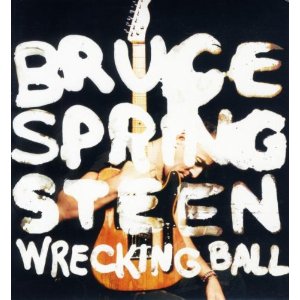
The Boss is still very much The Boss. The few doubts I had after his disappointing album a couple years ago have been completely wiped away in 2012. Wrecking Ball is right there in the conversation for his best work since Born in the USA. In fact, there are only three of his records that I think are unquestionably better (Born to Run, Darkness, Born in the USA). It probably doesn’t really come out as his 4th best record, but it’s at least in the conversation. Which is pretty impressive for someone who has contemporaries that haven’t produced anything relevant in decades.

And, after seeing him on Tuesday night, I can report that his live shows are just as energetic as ever. He played for over 3 hours with only a few seconds of pause in the whole night. There were a ridiculously large number of the classics (Badlands, Born to Run, Thunder Road, Rosalita, Dancing in the Dark, to name a few), a nice smattering of the old and new, including some blistering performances of the great songs on the new record. I feel incredibly blessed to have seen Jeff Mangum and Springsteen within the course of just a couple weeks – those are easily two of the most mind-blowing concerts I have ever been to.

What makes Wrecking Ball such a great record? Well, in large part it’s a function of Springsteen’s complete willingness to jump headfirst into it without worrying about whether it’s cool. It does, of course, mean that a few of these tracks are a little over-seasoned. “We Take Care of Our Own” kicks things off in precisely that zone of slight indistinction. It’s a great song, that sound big and brash. It just *sounds* bright. And the message is almost aggressively straightforward: “this is America. We ought to take care of everyone, not just the rich and secure.” That theme does make me just a tad uneasy, given that I’m inherently very skeptical of things that can be deployed in a jingoistic way. Sure, we can take care of our own, but what about all those on the other side looking in? Especially when paired with ‘wherever this flag is flown.’ I want to ask: so that includes all our foreign military bases, I guess? But really, this is just another “Born in the USA” type of problem. The whole album is built around the idea that ‘we’ are most powerful when we conceive of ourselves in terms of openness and hospitality. If you want to discover a slightly clunky nationalism, sure it’s there. But that’s not all there is by any means.

You get some more of this on “Death to My Hometown” where he rolls out his best Celtic barnburner and lashes out with intense anger at the role of finance and money: “They destroyed our families, factories, and they took our homes / They left our bodies on the plains, the vultures picked our bones.” On my first listens, I was turned off by the simplistic nature of his critique. Who is the ‘they’ here? Rich people? Robber barons? Outsourcing? It’s not really clear. And the exceedingly general nature of the critique feels like a problem. Most of his best work on this theme is far more particular, featuring a real STORY (see: The River, Youngstown, etc.). I feel like the overly general nature of the critique makes it hard to really DO anything with it.

That said, I think my point from a couple weeks ago really stands here. This song (and, more broadly, the whole album) is not meant to be a view from nowhere. It’s telling a specific kind of story, and it’s really quite important to hear it on those terms. While I have some general skepticism about paeans to lost manufacturing in terms of the policies that get proposed (basically kneejerk protectionism), a society that isn’t terribly upset about those who are left behind is a poor society–even if you can’t just (and shouldn’t want to) go back to the 1950s.

Same thing goes with “Shackled and Drawn,” which reads a bit too much like a paean to the guys working the fields – something that was out of date even when Springsteen was getting started, much less now. And he’s got a goofy fake-Okie accent. But it scorches live, and it’s not Bruce’s fault that he is a child of a particular place in history. Sure you get the occasionally hokey song, but the influence of his folk heroes are a clear net positive on his work as a whole.

So far I’ve talked about the good songs that still give me slight reservations. But I’ve also got some pure, unabashed love for parts of this record. First and foremost is “Land of Hope and Dreams,” which has actually been kicking around for a decade at this point, but finally gets the studio treatment here. And it’s a tour de force. You get basically the entire Springsteen mythos here: trains, lost souls, community, redemption, and a killer saxophone solo from the Big Man (one of his very last, sadly). And again, the fact that the mode of reference is almost anachronistic these days is actually part of the point. It’s a call to remember what is great in our past, not to say that we can go back, but to caution us about what it means to move forward.

You get the same kind of sentiment (phrased in a different way) on “Wrecking Ball.” Sung from the perspective of the old Giants stadium, waiting to be knocked down, it strikes a tone of defiance, resolution, and acceptance. It’s a great metaphor, because you get the sense that this is really a song about Bruce himself, and the ever-present fact of age. All things must pass, and he knows it, but that doesn’t mean there is no honor in standing astride of time shouting no. If the end must come, he says, let me face it proudly and make the very best of what is left to me.

Other highlights include the rousing “We Are Alive,” which has a slightly quirky beat and pitches the general themes of the album in the grand terms of ghostly remainders. Or the elegiac “Rocky Ground,” which took a while to really work for me (it’s very busy sonically, and includes a rap interlude, and sampling!), but has grown into one of my favorites. The biblical imagery works, his voice walks the line between weary and defiant, the horns are simply beautiful, and the rap bit is pitched perfectly. It’s a real testament that he’s attempting things like this, but an even bigger testament that he can make it all work.

Sure, there are a couple goofy tracks on this record. And no, it doesn’t all work perfectly. But when it does work, the heights it scales are glorious. And it’s the best album I’ve heard so far this year.

Posted in Uncategorized | Leave a comment